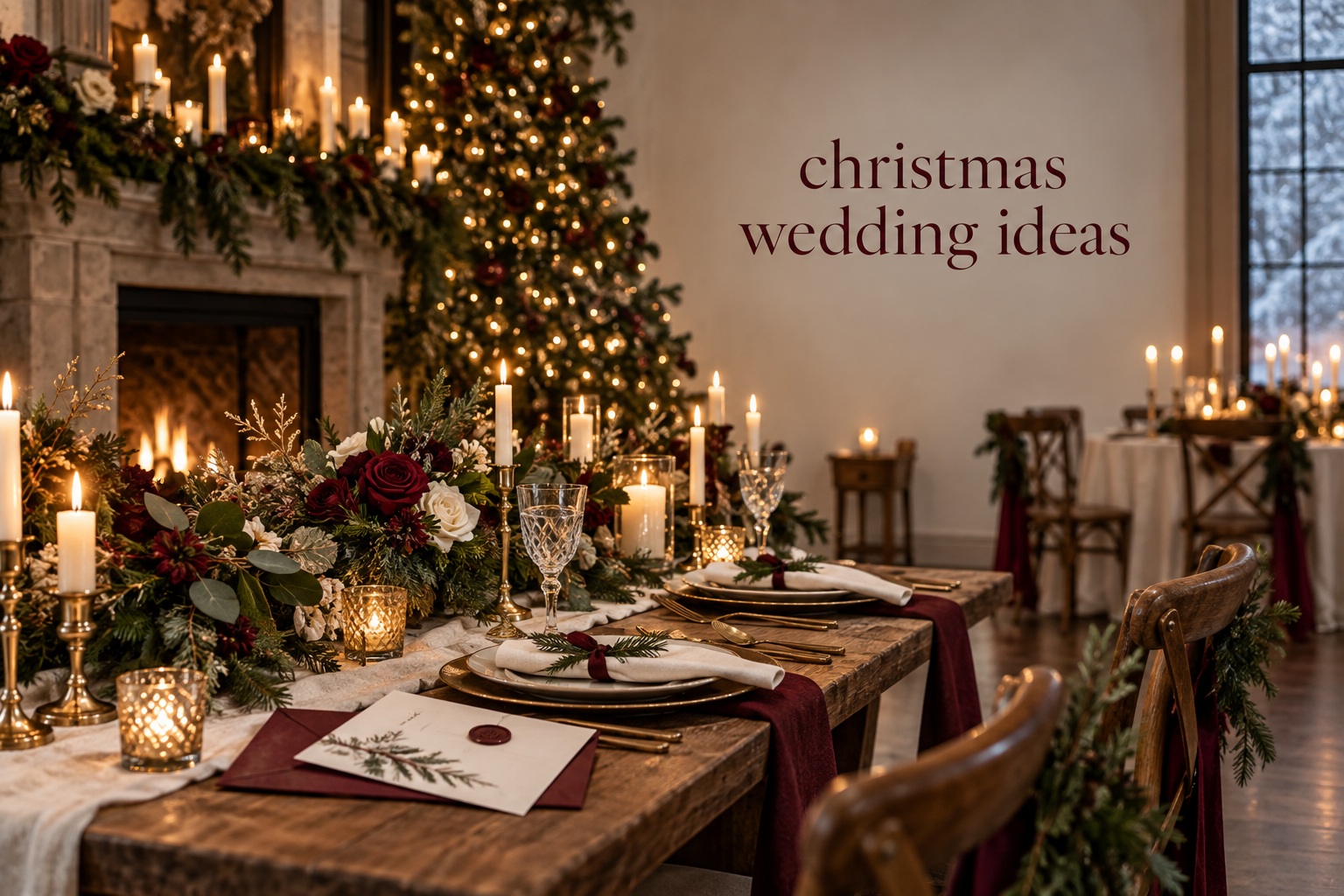
Christmas Wedding Ideas: Build a Cohesive Holiday Look
The best Christmas wedding ideas do not ask you to cover every surface in ornaments. They give the day a recognizable feeling through a small group of details that work together. Choose a mood, repeat a few visual signals, and let the season support the celebration instead of taking it over.
This capsule approach is useful whether you are planning a candlelit ballroom dinner, a rustic lodge weekend, a modern city ceremony, or an intimate gathering at home. Start with a foundation, add a layer for the ceremony and attire, then finish with guest-focused details that make December feel welcoming. The result can be festive without looking like a themed party.
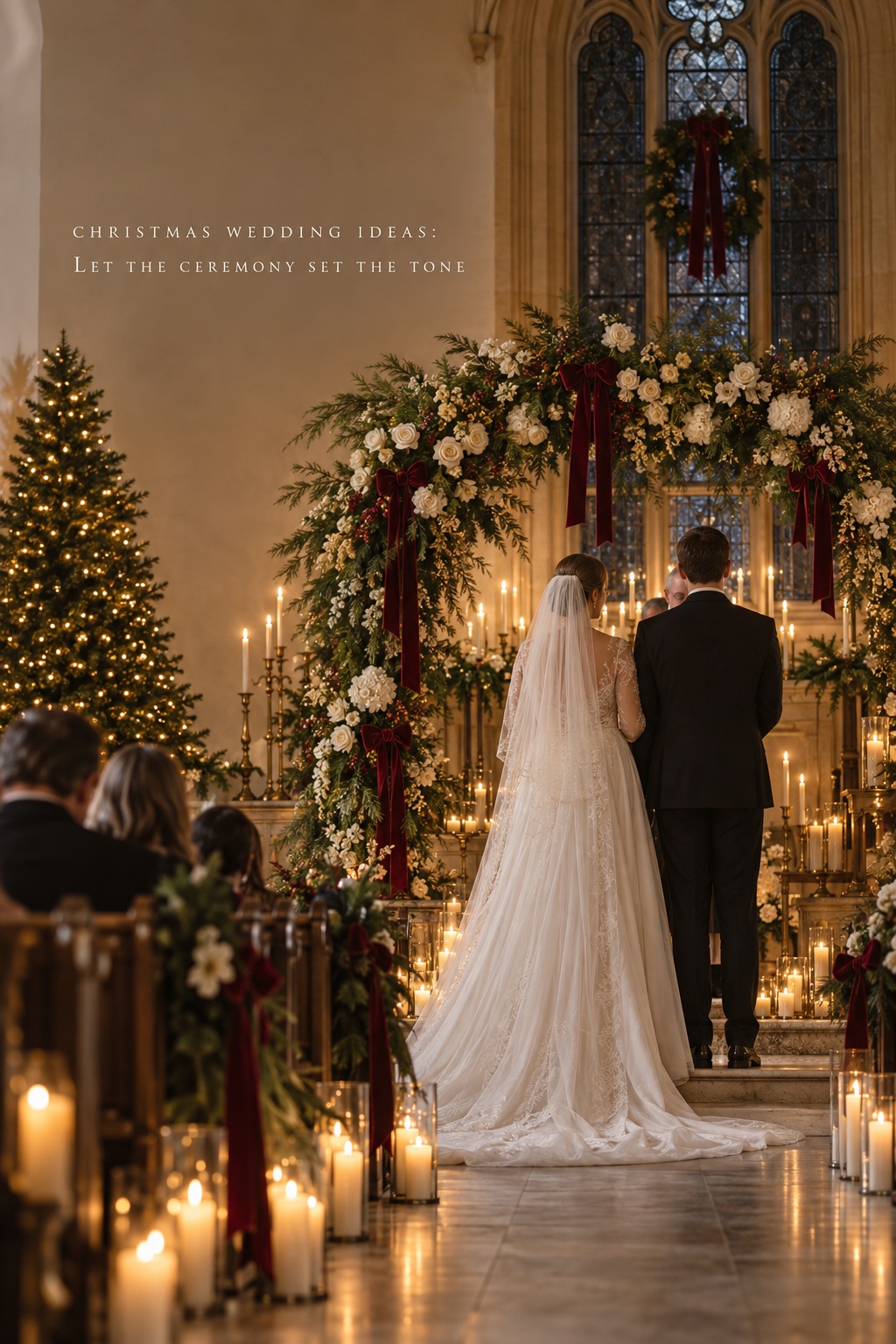
Start with a Christmas wedding capsule, not a prop list
A Christmas wedding capsule is a short set of decisions that can guide the whole day. Instead of collecting isolated inspiration, choose one dominant mood, one anchor color, one natural seasonal element, and one lighting idea. Every later choice should either repeat one of those decisions or deliberately provide contrast.
Your wedding look is only the beginning.
Keep your guest list, vendors, timeline, and every important detail together with Zarellea — so your day feels as considered as your style.
For example, a romantic candlelit capsule might use ivory, deep burgundy, evergreen, and warm brass. A modern winter capsule might use white, midnight blue, silver, and sculptural branches. A relaxed lodge capsule could combine oatmeal, cedar green, cranberry, wool, and firelight. None of these requires a literal Christmas tree in every room.
Choose the feeling before choosing the color
Words such as candlelit, woodland, heirloom, modern, playful, or snowy are more useful than starting with a generic red-and-green palette. They help you decide what belongs and what does not. A candlelit wedding may need fewer decorations because the glow is doing much of the visual work. A playful celebration can handle brighter ribbon or ornaments, but it still benefits from a controlled base.
Write a one-sentence design brief before you contact vendors: “We want a warm, elegant Christmas wedding with evergreen texture, burgundy accents, and dinner-party lighting.” This sentence can guide the invitation, flowers, linens, attire, cake, and photography. It also gives you a simple test for new ideas. If a detail does not support the brief, it is probably optional.
Build around four repeatable signals
- Palette: Choose two main colors and one or two accents. Ivory and evergreen feel softer than bright white and saturated green; burgundy and brass feel richer than primary red and shiny gold.
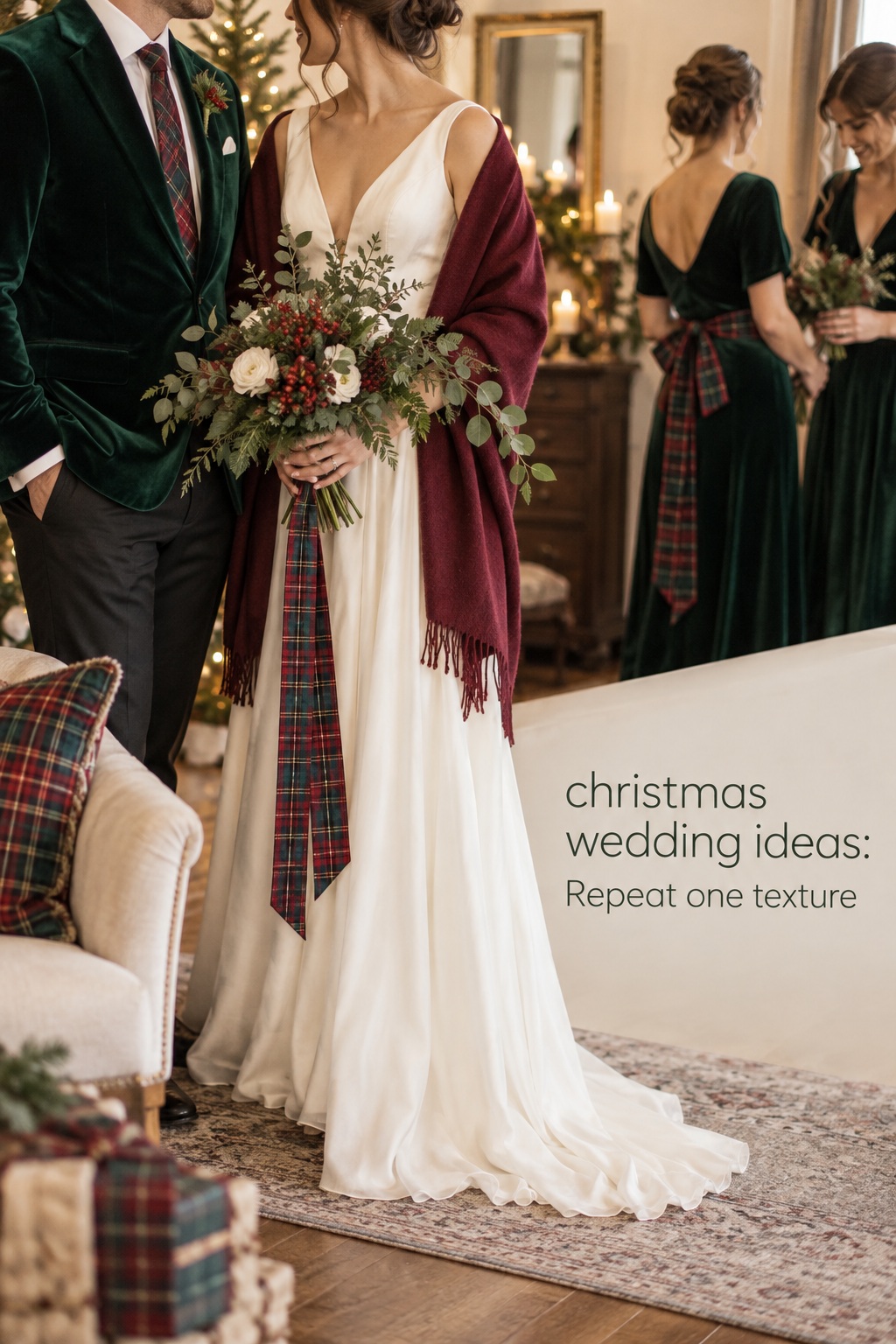
- Texture: Repeat one tactile material, such as velvet, ribbon, wool, linen, or frosted glass. Texture creates seasonal depth without adding visual noise.
- Natural element: Select one dependable shape or botanical cue, such as cedar, pine, holly, berries, pine cones, or bare branches. Use it in different scales rather than buying many unrelated elements.
- Light: Decide whether candlelight, twinkle lights, lanterns, or a brighter winter palette is carrying the atmosphere. Lighting should be part of the design brief, not an afterthought.
These signals make the day easier to edit. If the venue already has greenery, you may not need additional garlands. If the tables are long and visually busy, a single repeated candle shape may work better than a different centerpiece for every table. The capsule protects both the mood and the budget because it gives you permission to say no.
Build the visual language across ceremony, paper, and attire
Once the capsule is defined, carry it through the parts guests see before dinner. The invitation suite is the first signal, the ceremony is the emotional center, and attire gives the season a human scale. These areas do not need to match perfectly. They need to speak the same visual language.
Let the invitation introduce one clear seasonal cue
Use the invitation to establish the mood rather than announce a costume theme. A deckled ivory card with evergreen ink can feel quietly traditional. Midnight blue paper with silver type can suggest a snowy evening. Burgundy envelopes, a velvet ribbon, or a small botanical illustration can carry the holiday note without filling the suite with candy canes and snowflakes.
Repeat the invitation cue in the ceremony program, menu, escort cards, or welcome sign. A small evergreen sprig tied to the paper goods can be enough. Junebug Weddings notes that invitations give guests an early guide to the celebration’s palette, which also helps them understand the expected atmosphere and attire. Keep practical information easy to read, especially if guests are traveling in winter.
Make the ceremony feel seasonal but still like a ceremony
Choose one focal point for the ceremony: a wreath, a restrained evergreen arch, a fireplace, a candle arrangement, or a view of the snow. Then leave enough space around it for the couple, the officiant, and the vows to remain visually central. If the venue already has seasonal decor, work with it instead of competing with it.
For an indoor ceremony, use clusters of candles at different heights, a narrow aisle runner, or greenery on the chairs nearest the aisle. For an outdoor ceremony, think about comfort and timing before adding styling. A covered structure, clear route, warm wraps, and a short portrait plan may matter more than an elaborate arch. The Knot’s winter examples show how practical layers and a covered ceremony can protect the experience while preserving the seasonal setting.
Use attire to add warmth, color, and movement
Attire is one of the easiest places to make a Christmas wedding feel personal. A velvet jacket, deep jewel-tone dress, satin shoe, plaid getting-ready layer, faux-fur wrap, or embroidered accessory can carry the season without changing the entire outfit. The goal is not for every member of the wedding party to wear the same holiday reference. Give them one shared direction and allow some variation.
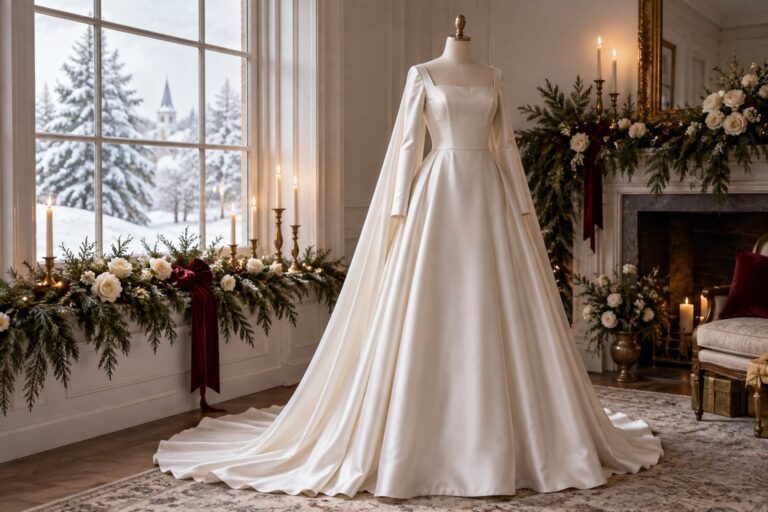
For the couple, consider where the seasonal detail will appear in photographs. A cape or wrap can shape an outdoor portrait, while a colored shoe or velvet bow can stay private until the reception. For attendants, choose layers that are actually usable in the weather. A beautiful wrap that slips off the shoulders during photos is less successful than a simple, well-fitted layer that lets everyone move.
Keep the groom’s look connected through texture or color rather than novelty. Velvet, a dark green dinner jacket, a burgundy pocket square, or a pine-inspired boutonniere can work with a formal suit. The Knot also highlights velvet menswear and evergreen boutonniere details as ways to bring winter character into attire with restraint.
Carry the feeling into the guest experience
The most memorable Christmas wedding ideas often solve a guest problem at the same time they add atmosphere. December can mean cold sidewalks, dark afternoons, travel delays, full calendars, and guests carrying coats. Hospitality gives the theme a reason to exist. Ask what will help people feel oriented, warm, fed, and included.
Design a welcome that works before the reception
Start with a clear entrance. A wreath, lanterns, a simple welcome sign, or a row of potted evergreens can tell guests where to go without making the venue feel overdecorated. If the ceremony and reception are in different rooms, use the same paper color or greenery cue to create continuity.
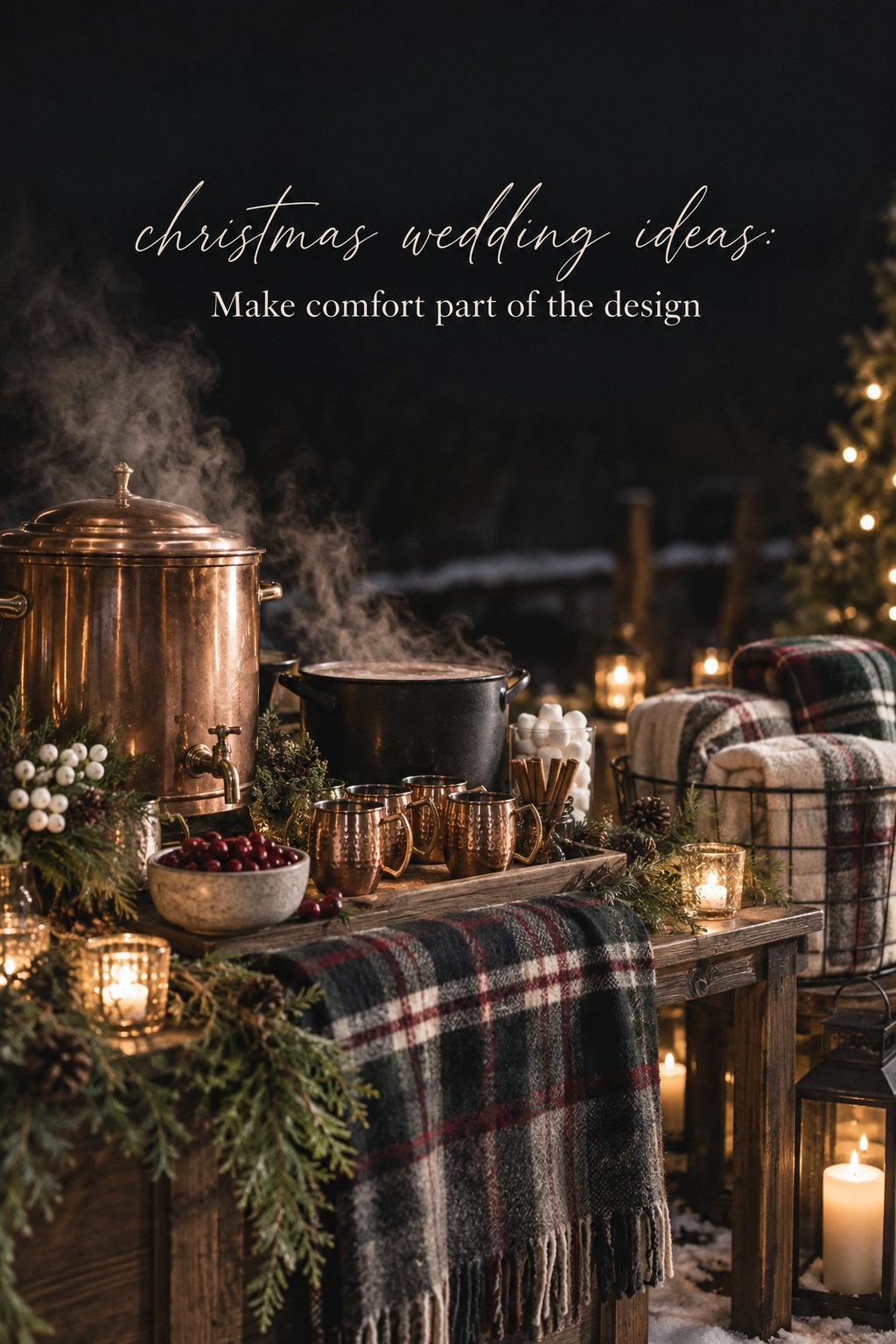
Offer a warm welcome drink when it suits the venue and menu: spiced cider, hot chocolate, tea, mulled wine, or a nonalcoholic cranberry spritz. Label ingredients clearly and provide a nonalcoholic option that feels equally considered. A signature drink can be seasonal without being sugary or complicated. Build the serving plan around the actual arrival flow so guests are not holding full cups while searching for coats or seats.
Make warmth part of the seating and timeline
For an outdoor or partly outdoor event, create a visible comfort station with blankets, wraps, hand warmers, and a place to return used items. WeddingWire includes quilts and blanket stations among its practical winter suggestions. Place the station where guests naturally pause, not in a remote corner that requires instructions to find it.
Consider the daylight when building the schedule. A late afternoon ceremony may move quickly into darkness, which can be beautiful for candlelight but difficult for travel and portraits. Give the photographer a realistic window for outdoor images, and tell guests in advance if they will walk between buildings. The schedule should protect the mood instead of forcing everyone to rush through it.
Choose food, music, and favors that extend the story
Seasonal food can be subtle. Add a winter soup course, citrus and cranberry notes, a hot cocoa station, warm cookies, roasted nuts, or a dessert table that feels like an evening gathering. You do not need to replace the entire menu. One or two comforting details are enough when they are served at the right moment.
Music can shape the holiday atmosphere without turning the reception into a caroling event. Use instrumental seasonal music during arrival, a meaningful reading or song during the ceremony, and a normal dance set for the party. If carolers or a string quartet fit your celebration, place them where they enhance conversation rather than compete with it.
For favors, choose something guests can use or keep: an ornament with the wedding date, a small candle, a packet of tea, a locally made treat, or a cozy pair of socks for a lodge celebration. A favor becomes more meaningful when it connects to the capsule and has a clear place in the evening. New Jersey Bride also highlights an ornament guest book as a way to turn a seasonal object into a lasting record of the day.
Adapt the capsule to five venue and style directions
The same Christmas wedding ideas can look completely different depending on the venue. Use the capsule as a flexible base, then adjust the proportions. A historic room may need editing, while a blank modern venue may need a stronger focal point. These five directions are starting points rather than rules.
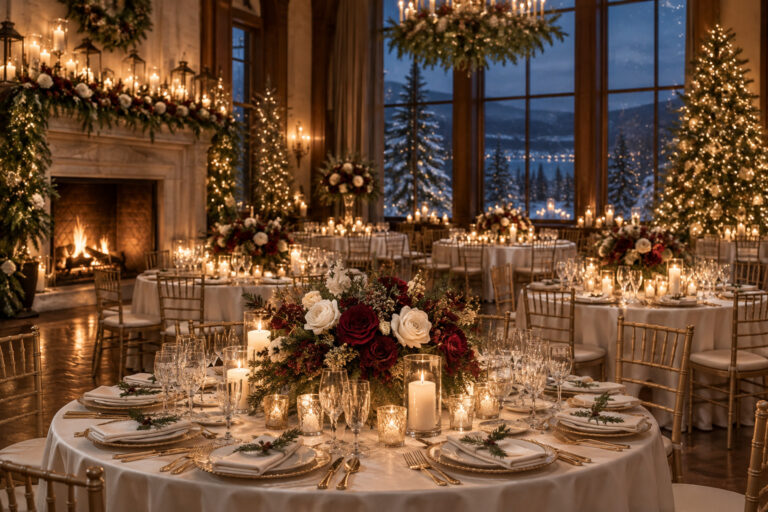
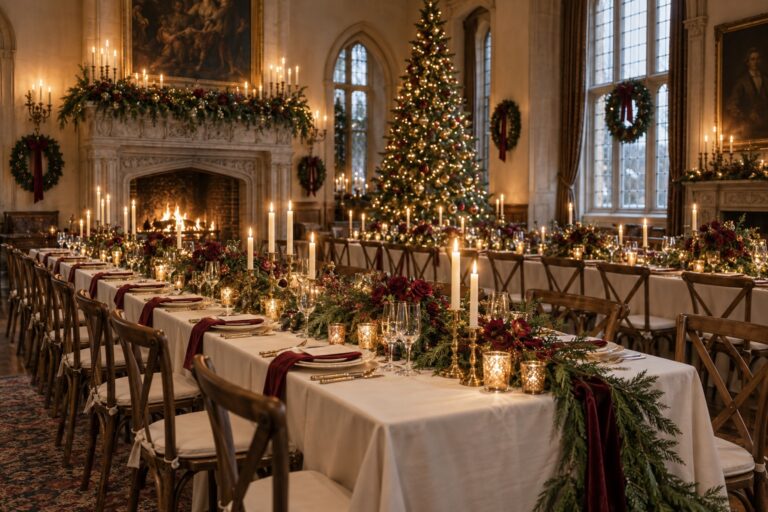
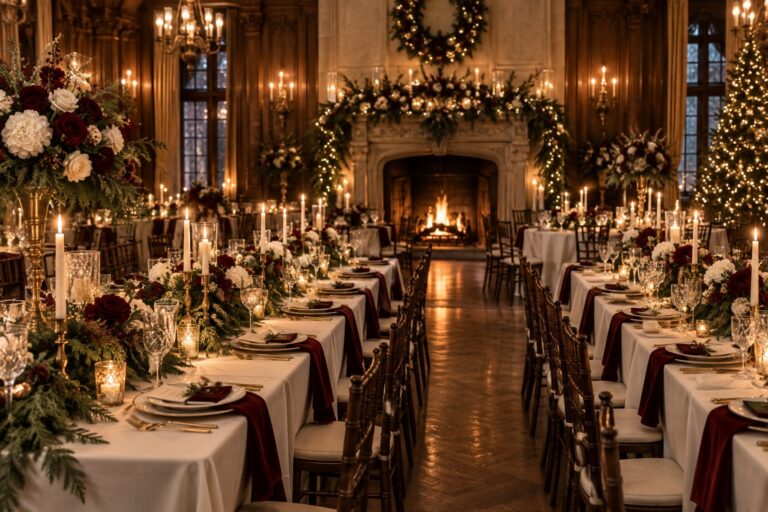
Classic ballroom: ivory, burgundy, evergreen, and brass
Let the architecture do some of the work. Use ivory linens, low evergreen runners, burgundy flowers, warm taper candles, and brass accents. A restrained wreath at the entrance and a velvet ribbon on the stationery can connect the rooms. Avoid filling a grand space with small decorations that disappear from a distance. One generous floral focal point and repeated candlelight will read more clearly.
Rustic lodge: cedar, wool, cranberry, and firelight
Use the lodge’s existing timber, stone, or fireplace as the foundation. Add wool wraps, plaid in small doses, cedar garlands, simple pine cone details, and a hot drink station. Keep the florals relaxed and textural. A seating display on miniature evergreen branches or a welcome sign framed with cedar can create enough seasonal identity without making the room feel like a retail display.
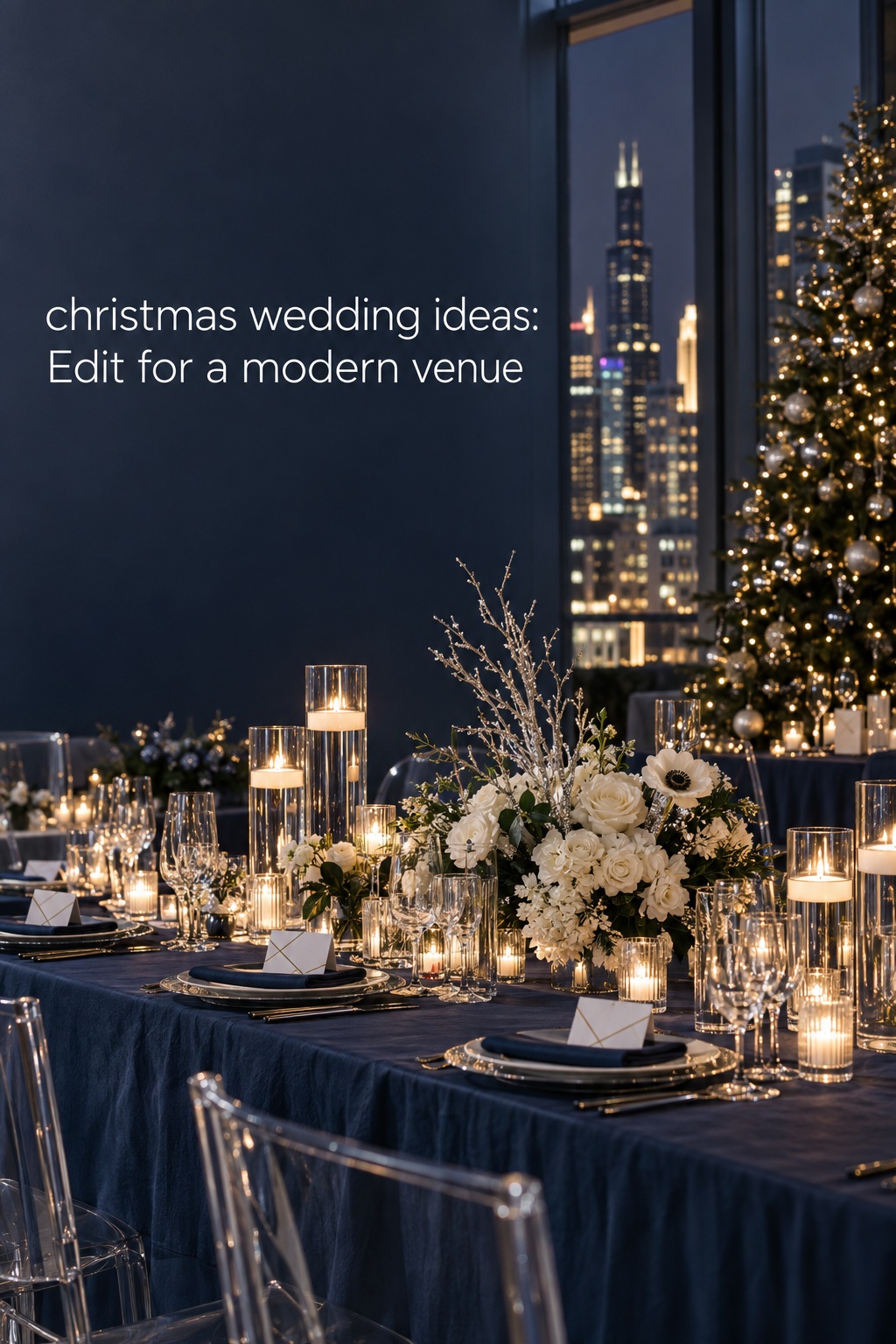
Modern city venue: white, midnight blue, silver, and glass
Use negative space and clean repetition. Try clear cylinders with single branches, white florals, silver ribbon, blue menus, and a concentrated lighting plan. Skip rustic elements unless they have a strong modern shape. A geometric ceremony backdrop, a single oversized wreath, or a row of illuminated trees can create impact without covering the venue’s lines.
Intimate home-style gathering: cream, red berries, greenery, and candlelight
Make the celebration feel like an elevated dinner at a loved one’s home. Use a family table, handwritten place cards, small arrangements in collected vessels, and a menu of familiar comfort foods. Keep the guest list and layout visible in the design. A small tree with notes or ornaments can become both decor and a guest activity, while a shared dessert table encourages people to linger.
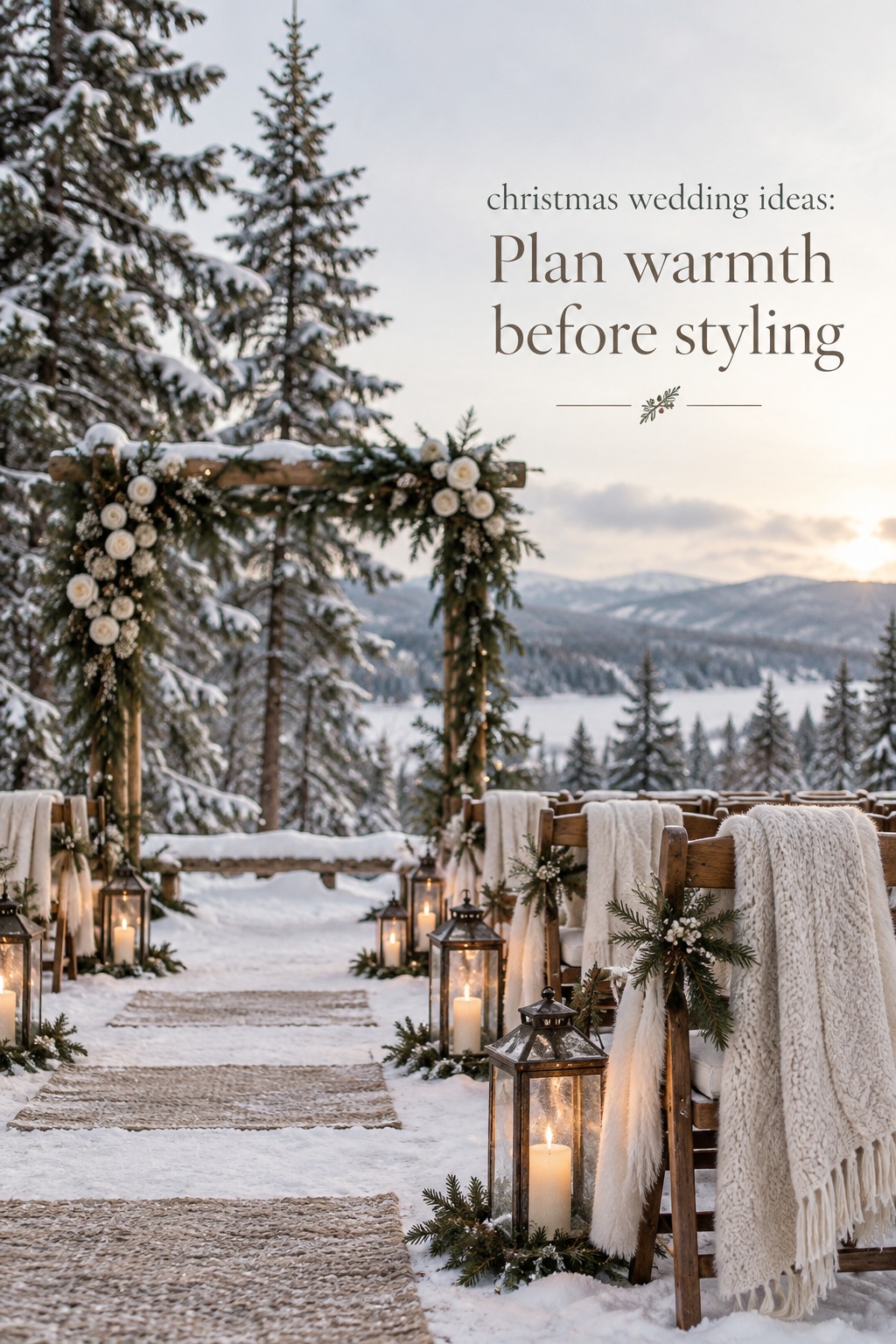
Snowy outdoor celebration: winter white, evergreen, wraps, and a short plan
Put logistics ahead of styling. Confirm the heated or covered areas, walking surfaces, weather backup, lighting, restroom access, and transport. Then use the landscape as the main decoration. White flowers, evergreen, a textured wrap, and warm lanterns may be all you need. Plan the most important portraits around the best light and provide guests with practical information before they arrive.
In every direction, keep one element intentionally quiet. If the flowers are dramatic, simplify the paper. If the venue is full of built-in Christmas decor, edit the tables. If the attire carries strong color, let the ceremony backdrop breathe. Contrast is what keeps a seasonal design from becoming visually exhausting.
Sources and methodology
This guide was shaped by a review of ten US-focused and wedding-editorial pages covering seasonal palettes, ceremony and reception planning, winter guest comfort, attire, lighting, favors, and real wedding examples. The recommendations above combine those recurring themes with a capsule-system approach designed for easier decisions. The closest existing Wedding Look coverage focuses on Christmas tables, decorations, and dresses, so this article connects the full guest journey without repeating those pages’ central formulas.
For supporting context, see The Knot’s Christmas wedding ideas, WeddingWire’s winter wonderland suggestions, Junebug Weddings’ festive features, Green Wedding Shoes’ atmosphere-first guide, and New Jersey Bride’s practical tips.
FAQ
What colors work best for Christmas wedding ideas?
Classic red, evergreen, ivory, burgundy, gold, midnight blue, silver, and blush can all work. Choose two main colors and one or two accents, then repeat them through paper, flowers, attire, and lighting. The best palette is the one that fits your venue and personal style, not the one with the most seasonal colors.
How do you make a Christmas wedding feel elegant?
Use restraint, texture, and repetition. Choose one mood, keep novelty details limited, and invest in a few strong elements such as candlelight, velvet, greenery, or beautiful paper. Let the venue’s architecture and the guest experience carry part of the atmosphere.
What should guests receive at a winter wedding?
Clear travel and timing information is the most important starting point. Depending on the venue, consider wraps, blankets, hand warmers, a coat check, warm drinks, and a covered route between spaces. Practical details feel luxurious when they are easy to find and thoughtfully presented.
Can a Christmas wedding avoid red and green?
Absolutely. Try ivory and silver for a winter-white look, midnight blue and brass for an evening mood, blush and caramel for a softer editorial style, or black, cream, and evergreen for modern contrast. Seasonal feeling comes from the combination of light, texture, foliage, and hospitality as much as from color.
How much Christmas decor is too much for a wedding?
There is too much when the details compete with the people, food, architecture, or photographs. Choose a few repeated signals and leave quiet areas around them. If the venue already has seasonal decor, edit your additions so the final result feels layered rather than crowded.
What is a simple Christmas wedding idea with a lasting purpose?
Invite guests to sign ornaments, then display them on a small tree during the reception and take them home afterward. Other useful options include personalized candles, tea, cozy wraps, or locally made treats. A seasonal detail feels more special when it becomes part of a future tradition.