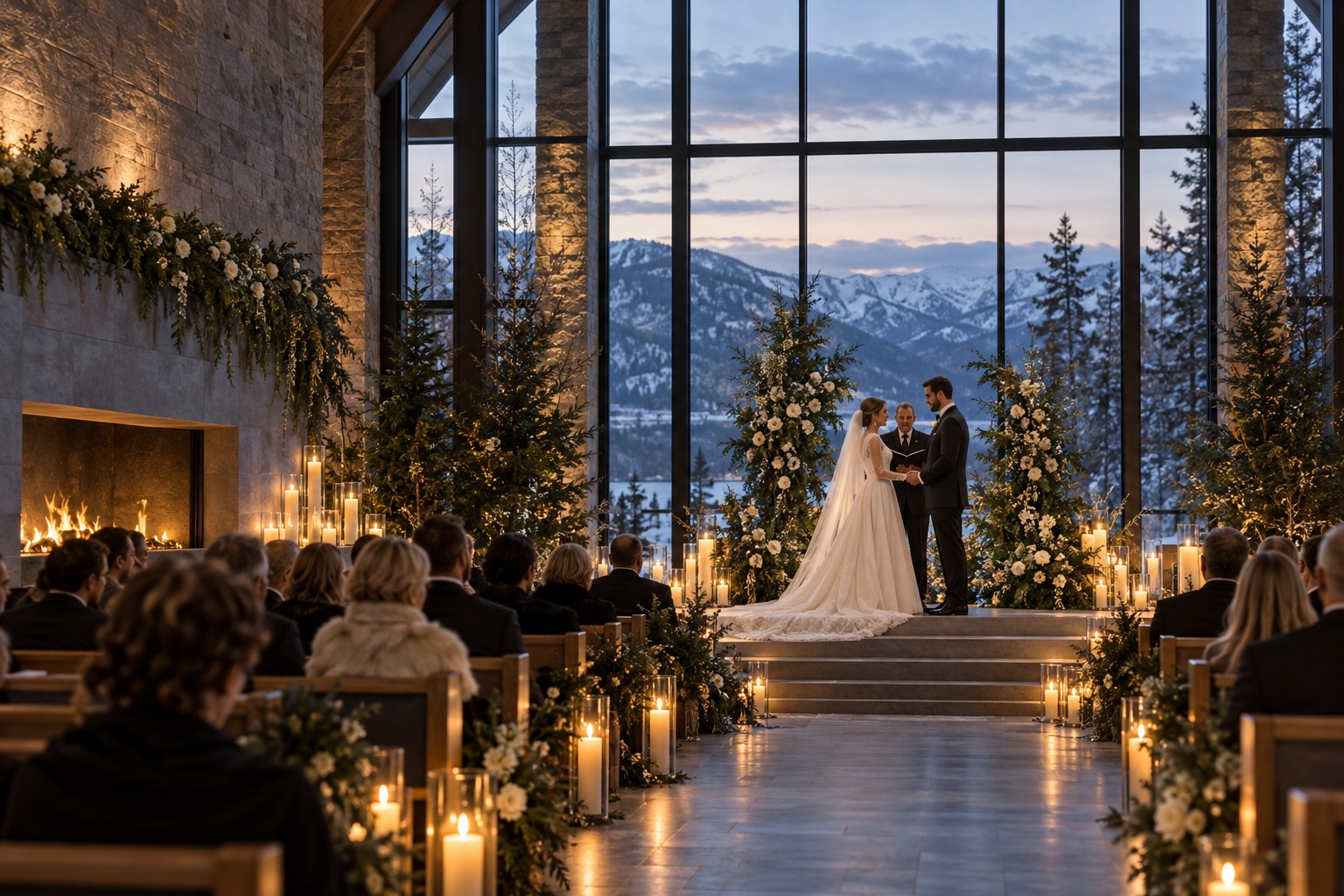
Winter Wedding Ceremony Ideas That Feel Warm
A winter wedding ceremony can feel more intimate than a warm-weather service, but only when the season is planned as an experience rather than pasted on as a theme. The early darkness, lower temperatures, layered clothing, and shorter transitions all change how guests see, hear, move through, and remember the ceremony.
The strongest winter plans use those conditions deliberately. They layer warm light instead of relying on one bright fixture, place comfort details where guests actually need them, and choose one or two seasonal rituals that add meaning without turning the vows into a holiday program. The result can be modern, romantic, spiritual, rustic, or completely minimal. The common thread is that every choice supports the feeling of the ceremony.
What Is Changing in a Winter Wedding Ceremony
The most useful shift in winter wedding planning is moving from “How do we decorate for winter?” to “How should this ceremony feel when the light is low and the air is cold?” That question produces better decisions. It makes the venue, ceremony time, aisle, lighting, music, flowers, and guest seating part of one system instead of a collection of attractive details.
First, notice the role of natural light. A ceremony that begins at 4 p.m. in December may have a completely different visual mood from one that begins at noon in February. Window direction, trees outside, nearby buildings, and the time needed for guests to arrive all matter. Ask your photographer and venue coordinator what the room will look like at the planned start time, then check whether the altar, aisle, and faces will remain readable in photographs.
Your wedding look is only the beginning.
Keep your guest list, vendors, timeline, and every important detail together with Zarellea — so your day feels as considered as your style.
Second, think about temperature as part of ceremony pacing. Guests who are cold become distracted. They adjust coats, shift in their seats, keep their hands hidden, and pay attention to the exit rather than the vows. That does not mean every winter ceremony must be indoors, but it does mean an outdoor service needs a realistic duration, sheltered waiting area, suitable seating, and a clear response to wind, precipitation, and icy ground.
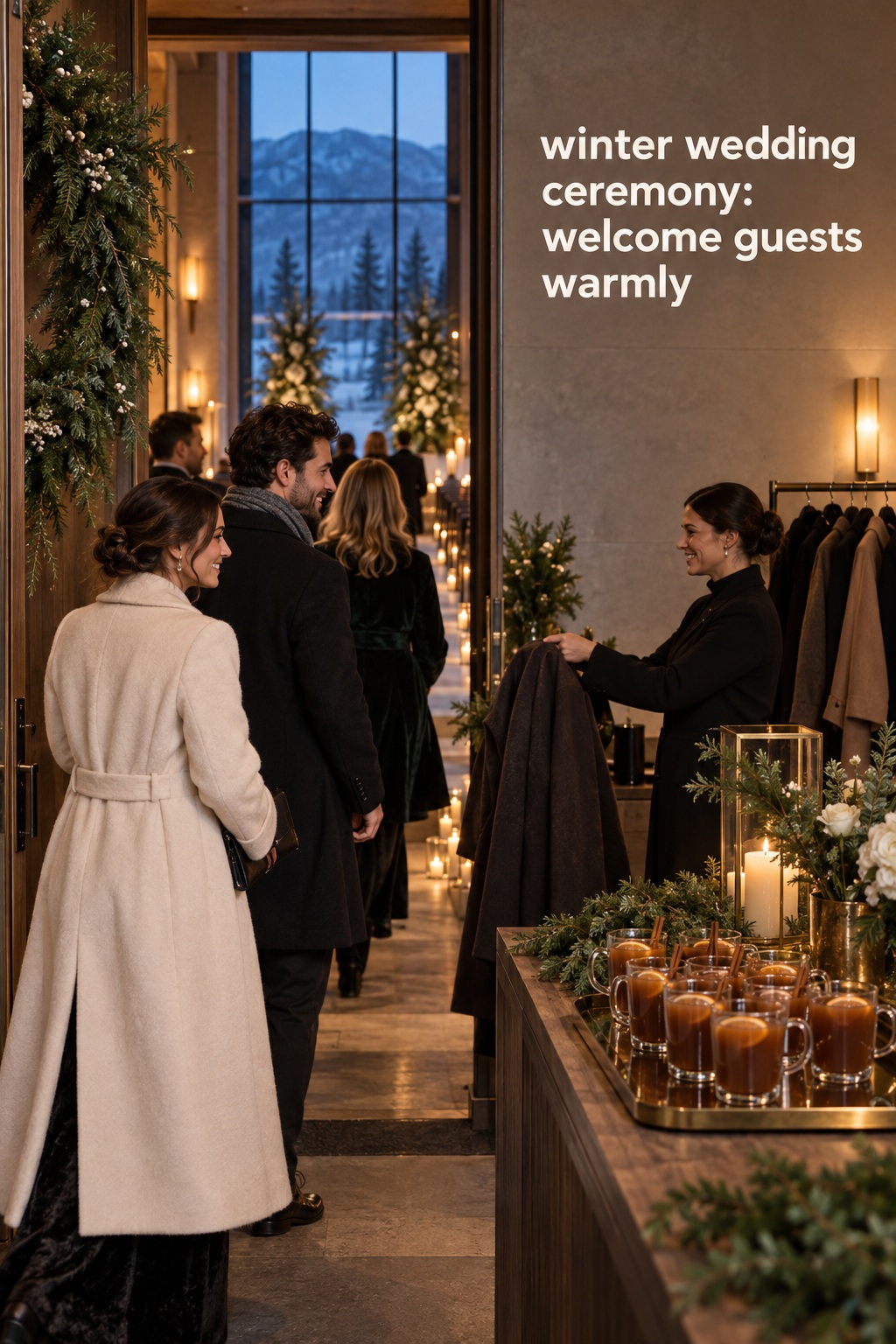
Third, winter changes transitions. Guests may move from a heated car to a chilly entry, from an outdoor ceremony to an indoor cocktail hour, or from a bright afternoon service to a darker reception. A short distance can feel complicated when people are carrying coats, protecting formal shoes, or trying not to lose sight of the group. Signage, staff guidance, coat storage, and a warm welcome station can do as much for the experience as the ceremony arch.
Finally, winter gives the ceremony a strong atmosphere without requiring obvious seasonal symbols. Low, warm light, textured fabrics, evergreen branches, bare sculptural stems, deep neutrals, and a quieter musical arrangement can suggest the season. You do not need snowflakes, red ribbons, or a Christmas palette. A ceremony feels winter-ready when the visual language is coherent and the practical plan is kind to guests.
- Light: confirm how daylight and artificial light will shape faces, vows, and photography.
- Temperature: decide how long guests can comfortably wait and sit in the actual conditions.
- Movement: plan the route between arrivals, ceremony, photos, and the next warm space.
- Meaning: select seasonal details because they belong to your story, not because every winter cue is required.
Build Warmth and Atmosphere Together
Warmth has a physical meaning and a visual meaning. Physically, guests need a comfortable room, sensible seating, and a way to manage coats, gloves, and wet footwear. Visually, the ceremony should feel inviting rather than stark. The best plans solve both needs with the same decisions.
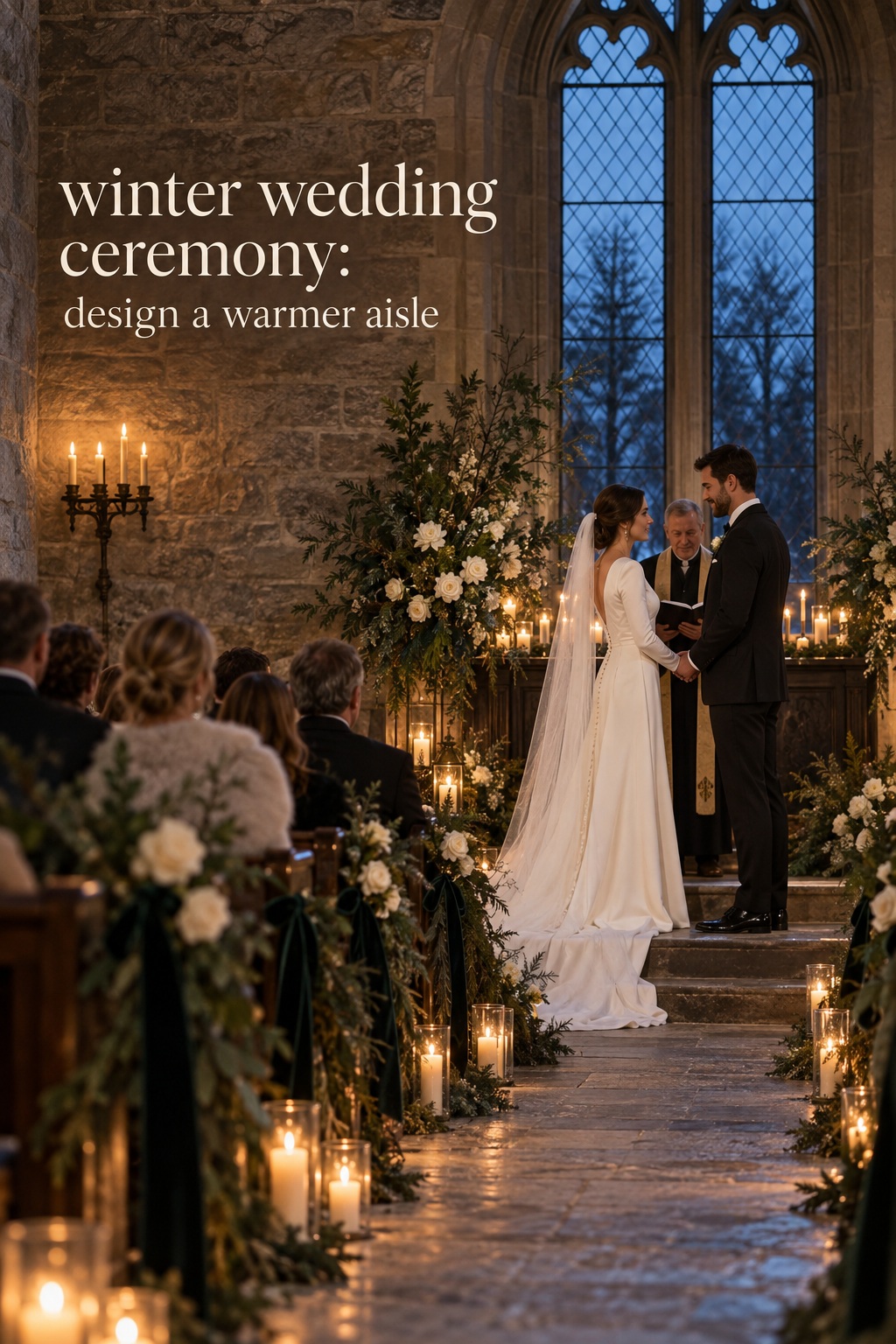
Begin with the venue layout. For an indoor ceremony, place the seating so guests are not directly beside a drafty door or under an uncomfortable air vent. If the room is large, bring the ceremony footprint inward instead of scattering chairs across a cavernous space. A smaller, denser arrangement makes the service feel intimate and can reduce the amount of decor required. Leave enough space for formal outerwear and for anyone who needs easier access to an aisle or exit.
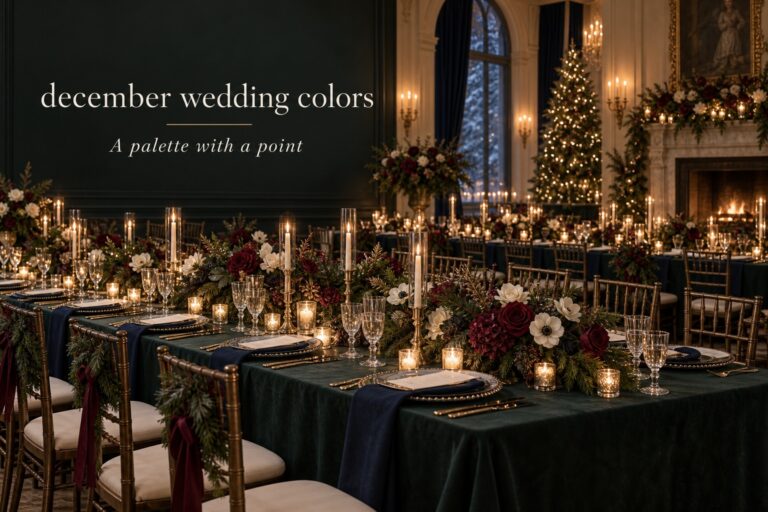
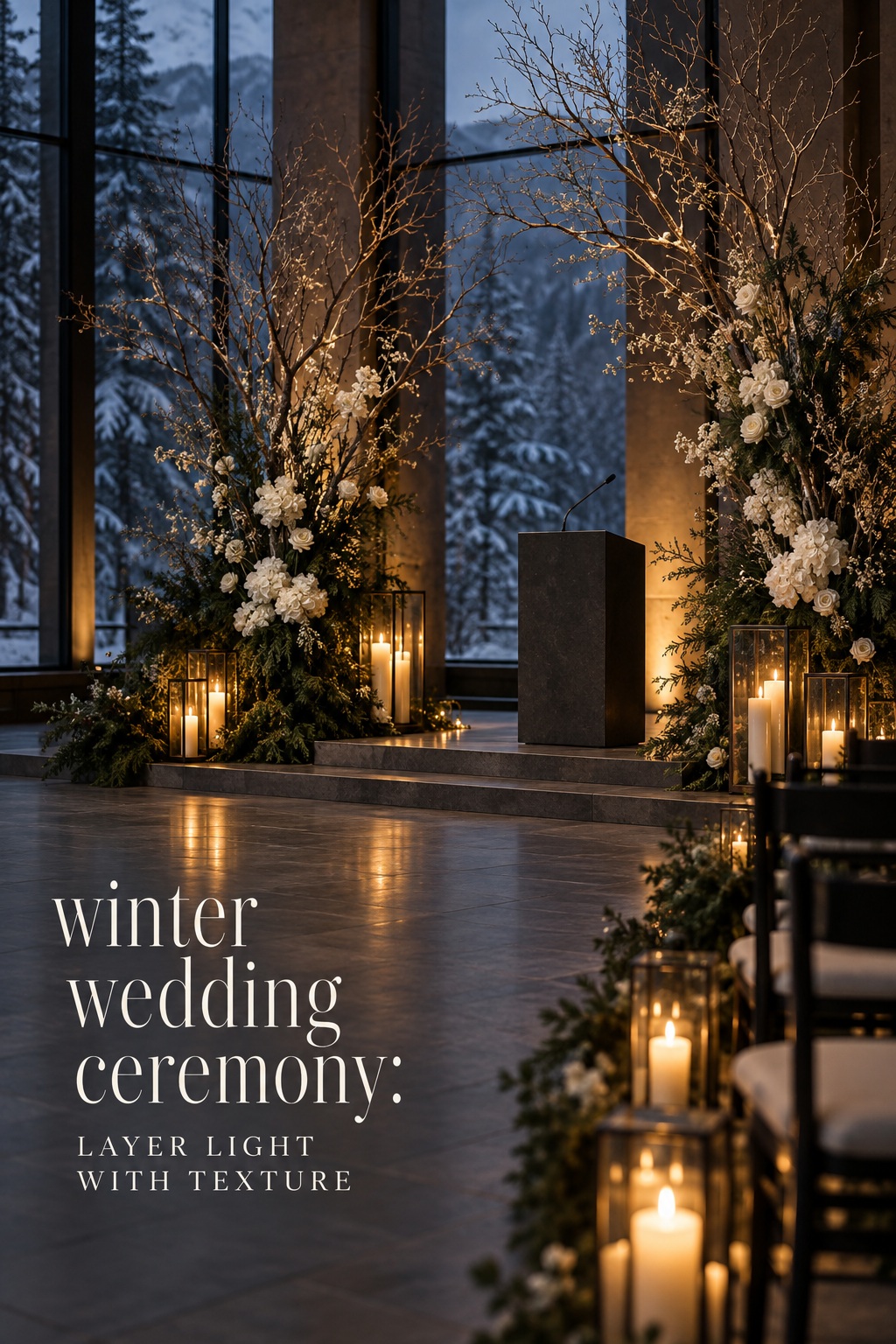
Lighting should be layered. Use the venue’s existing ambient light as the base, then add a controlled glow at the altar, along the aisle, and near the entrance. Candles can provide warmth and movement, but they should never be the only light source for faces or the only plan for an outdoor service. Battery-powered candles, lanterns, dimmable fixtures, and concealed uplighting can create a similar mood with more control. Ask the venue what is permitted and how flame, cords, and weather will be managed.
Use the aisle to communicate the season without blocking movement. A clean runner in ivory, taupe, or a deep neutral can make an indoor room feel softer. Evergreen, winter branches, dried seed heads, or restrained floral clusters can mark the aisle ends rather than filling every chair. For an outdoor ceremony, confirm that the surface is stable and that any rug, runner, or floral vessel will not become slippery or unstable in moisture.
Flowers should be chosen for the room and the date, not just for a color board. White blooms with greenery can feel crisp and architectural. Burgundy, plum, rust, or deep green can bring visual weight to a dark venue. Bare branches can create height, while low arrangements keep sightlines open. If the ceremony is outdoors, avoid delicate pieces that will collapse in wind or flowers that need more water than the setup allows. The arrangement should survive the actual waiting time, not only the styled photograph.
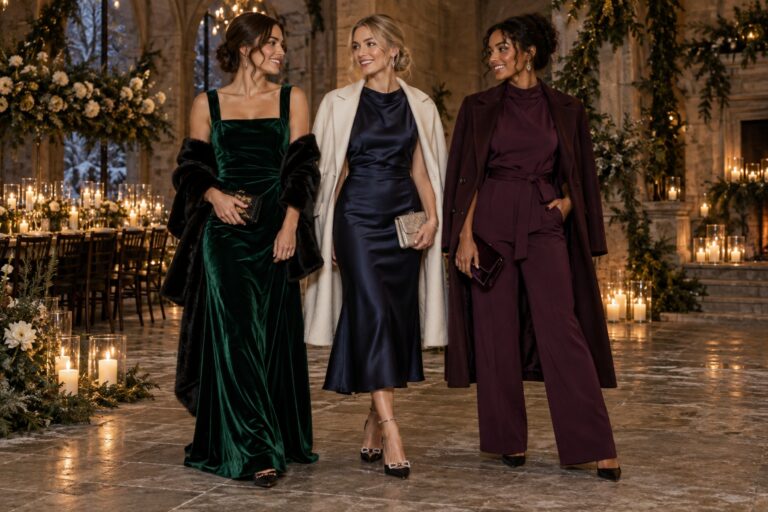
Textiles are another quiet way to make the room feel warm. Velvet ribbon, wool-toned signage, a soft aisle runner, upholstered chairs, and a tailored ceremony backdrop can add depth without creating a rustic look. If your venue is already ornate, choose one tactile material and let the architecture do the rest. If the room is modern and minimal, a single textured installation behind the officiant may be more effective than a full seasonal display.
Guest comfort belongs at the entrance and not only at the reception. Make the route obvious, provide a place for coats when possible, and tell guests in advance if any portion of the ceremony is outside. For an outdoor or hybrid plan, consider blankets that are clean and easy to distribute, warm nonalcoholic drinks, hand warmers where appropriate, and ushers who know the timing. These details should feel like hospitality, not an apology for the season.
- Check doors, vents, window drafts, and the temperature near the first and last rows.
- Use warm light at the altar, but keep faces bright enough for guests and photographs.
- Choose aisle materials that stay stable on damp, snowy, or uneven surfaces.
- Keep the ceremony design legible from the back row instead of relying on tiny details.
- Make the coat, beverage, and transition plan visible to the people helping guests.
Use Seasonal Ceremony Elements With Restraint
Winter offers meaningful symbols, but the ceremony does not need all of them. Choose the elements that connect to your relationship, family, faith, or shared sense of place. A single well-executed ritual is usually more memorable than a sequence of seasonal gestures that delays the vows.
A candle ritual is a natural fit for the season because it creates a visible moment of warmth and participation. It can be simple: two individual candles become one, or the couple lights a central candle from a shared flame. If you want family involvement, ask parents, children, or grandparents to take part, but make the movement easy to understand. Keep the table stable, the flame protected, and the script short enough that the symbolism stays clear.
A wine, tea, cider, or shared beverage ritual can also work, especially for a couple who associates winter with gathering around a table. The drink does not need to be holiday-specific. Choose something that reflects a family tradition or a place you both love, then explain why it matters in one or two sentences. If the ceremony is outdoors, use a vessel that is easy to hold with cold hands and confirm that the officiant can manage it without an awkward pause.
Readings should be selected for emotional fit first and seasonal atmosphere second. A poem about quiet, home, endurance, light, or change may feel more personal than a text that mentions snow. Couples who want a Christmas or New Year’s connection can choose a reading that belongs to their beliefs and family traditions, but there is no requirement to make a winter wedding ceremony religious or holiday-centered.
Music can carry the season without announcing it. Strings, piano, acoustic guitar, choral textures, and slower instrumental arrangements can make an indoor room feel softer. For an outdoor ceremony, confirm that the sound system can handle wind and that the processional music will remain audible. The music should support the emotional pace of the service, not compete with the temperature or the movement of guests.
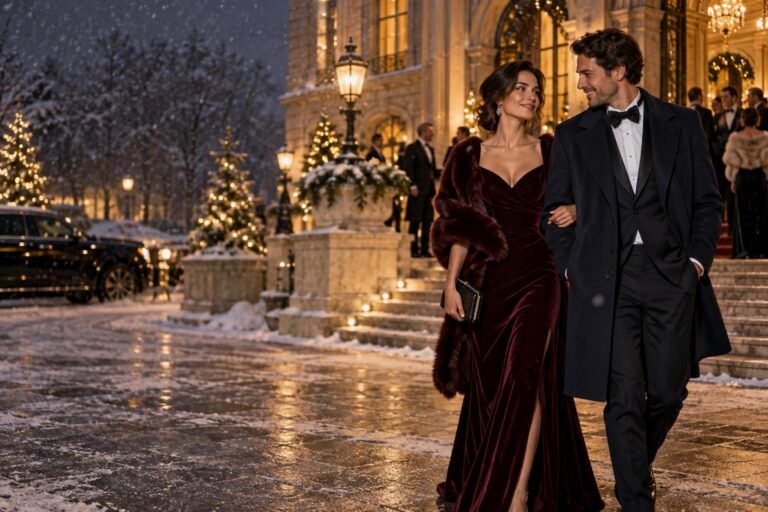
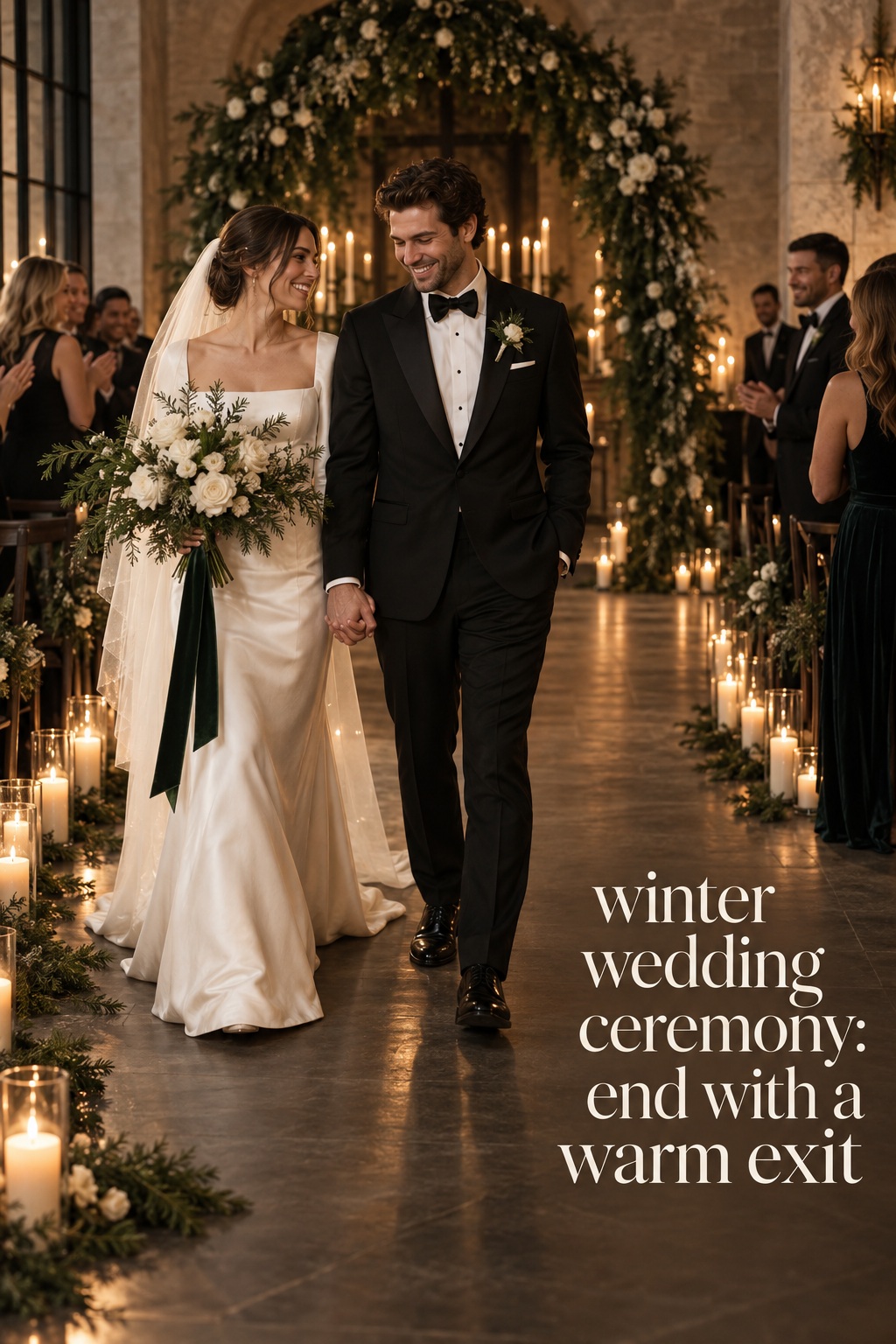
The exit is where a winter ceremony can become playful or cinematic. You might use candlelight, bells, winter greenery, a short snowfall effect, or a warm indoor receiving line. If you want an outdoor photo moment, keep it brief and offer a clear route back inside. Confetti, dried petals, and similar materials need venue approval, especially when they can become slippery or difficult to clean from snow and stone.
A useful rule is to choose one visual seasonal element, one emotional element, and one practical element. For example, that might be evergreen at the altar, a reading about home, and warm drinks at the entrance. Or it could be candlelight, a family unity ritual, and a covered walkway. The combination feels intentional because it serves the eye, the heart, and the body.
Make an Indoor, Outdoor, or Hybrid Plan That Can Flex
An indoor ceremony is the most predictable winter option, but predictable does not have to mean plain. Look for a room with character, usable window light, comfortable heating, and enough space for guests to arrive without standing in a cold corridor. A fireplace, stone wall, wood ceiling, or dramatic window may give you the seasonal atmosphere you want before any flowers are added.
For an indoor plan, focus on the first ten minutes and the final ten minutes. Can guests enter smoothly? Where do coats go? Is the ceremony room noticeably colder than the reception room? Does the exit lead through a service area or an elegant space? A small welcome table with a printed route, a warm drink, or a place for programs can make the experience feel considered from the first step.
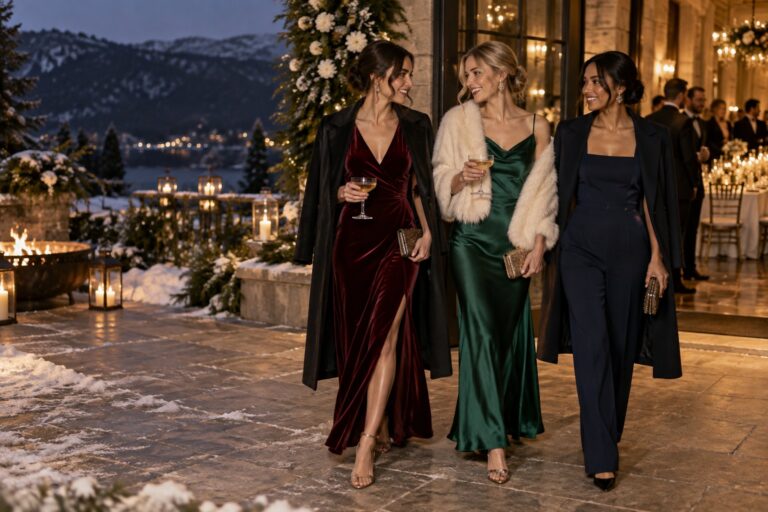
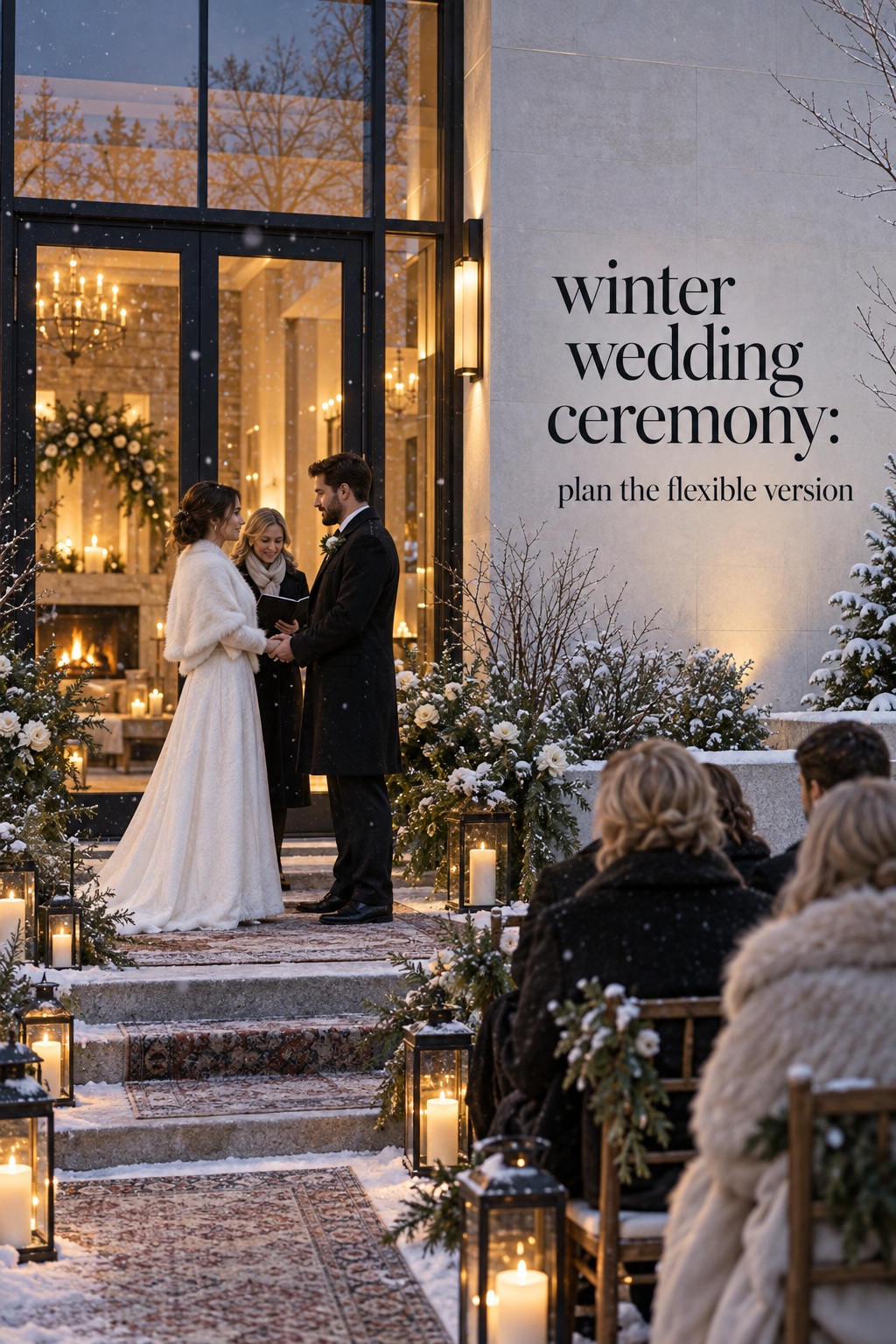
An outdoor ceremony can be beautiful when the setting is genuinely important to you and the comfort plan is honest. Ask how long guests will wait outside, whether seating can be moved under cover, how heaters will be placed, and what happens to the ceremony layout after rain or snow. Do not make elderly guests, young children, or anyone with mobility needs prove their enthusiasm for the weather. Offer a comfortable alternative that still lets them participate fully.
Keep an outdoor service concise. That does not mean rushing the vows. It means removing unnecessary pauses, long walks, and complicated transitions that become harder in the cold. Put the most important emotional moments at the center, then move guests toward warmth. If photographs require more outdoor time, schedule them separately rather than extending the ceremony itself.
A hybrid plan is often the most flexible answer. Guests might gather inside, step outside for a short processional or vow exchange, then return to a heated room for the rest of the service. Alternatively, the ceremony can happen indoors while the couple uses the outdoor setting for a brief first look or exit. The key is making the route obvious and ensuring the backup space is already beautiful enough to become the main plan.
- Choose indoor first when: the date has unreliable weather, guests include people sensitive to cold, or the ceremony is long and reading-heavy.
- Choose outdoor when: the setting is central to your story, the service can stay focused, and the venue offers a real comfort and weather plan.
- Choose hybrid when: you want a seasonal landscape moment but need reliable warmth for seating, vows, or older guests.
Before finalizing, write the ceremony day as a sequence rather than a mood board. Note guest arrival, coat handling, seating, processional, vows, readings, ritual, recessional, photos, and the move to the reception. Next to each step, write the temperature, light, surface, and staffing needs. If one step depends on perfect weather, decide its replacement now. A flexible plan feels calmer because it has already made room for reality.
Sources and Methodology
This guide synthesizes ten opened Google US search results about winter ceremonies, cold-weather wedding planning, seasonal readings, unity rituals, lighting, decor, and guest comfort. The winter planning guidance from The Knot helped frame the difference between broad seasonal inspiration and venue-specific choices. The unity ceremony examples from AMM informed the section on candles and family participation. Recommendations are planning guidance, so confirm weather, accessibility, flame rules, sound, and heating with your venue and vendors.
FAQ
How do you make a winter wedding ceremony feel warm?
Layer warm lighting, comfortable seating, tactile materials, and a clear guest-comfort plan. Use candles or lanterns as atmosphere, but keep faces and the altar well lit. A smaller indoor ceremony footprint, a coat plan, and warm drinks at arrival can make the room feel welcoming before any seasonal decor is noticed.
Is an outdoor winter wedding ceremony realistic?
It can be realistic when the service is concise and the venue provides stable seating, shelter, heating, a clear weather threshold, and a genuinely usable indoor backup. Tell guests about the outdoor portion in advance and offer a comfortable alternative for anyone who cannot remain outside.
What lighting works best for a winter wedding ceremony?
A layered plan usually works best: ambient room light, focused light at the altar, and lower decorative light along the aisle or entrance. Candles, lanterns, and warm uplighting can add atmosphere, but the couple’s faces must remain visible to guests and photographers.
What flowers are good for a winter wedding ceremony?
Choose flowers and greenery that suit the venue, date, and expected conditions. White blooms with evergreen, deep jewel tones, bare branches, dried textures, and restrained neutral arrangements can all work. For outdoor services, prioritize pieces that tolerate wind, moisture, and the time needed for setup and guest arrival.
What winter ceremony rituals can couples include?
Candle lighting, a shared beverage, a family blessing, a letter exchange, or a seasonal reading can add meaning. Choose one or two elements that connect to your relationship or family. Keep the explanation short and test the movement, vessel, flame, and timing before the ceremony.
How can a winter ceremony avoid looking like a Christmas party?
Use winter through atmosphere rather than a complete holiday palette. Warm light, textured fabric, bare branches, evergreen, deep neutrals, and a personal reading can feel seasonal without relying on ornaments, bright red, or novelty snowflakes. Let the architecture and your own story lead the design.
When should couples make the final indoor or outdoor decision?
Set a decision deadline with the venue, officiant, planner, and key vendors before the wedding week. The exact timing depends on the venue and forecast, but the backup layout, lighting, seating, sound, and guest communication should be ready well before the final call. A backup plan is strongest when it has been designed, not improvised.