Winter Wedding Hair: Fixes for a Polished Bridal Look
Winter wedding hair has a particular challenge: it needs to look soft and intentional in the bridal suite, then continue to behave when you move through cold air, dry indoor heat, coats, hugs, photographs, and hours of dancing. A style that looks beautiful in a saved image can lose its shape when a veil pulls at it, static lifts the fine pieces around your face, or a warm reception room changes the way your hair holds a curl.
The answer is not automatically a tight bun or a heavy layer of hairspray. Start by identifying the winter problem you are most likely to face, then choose a shape that solves it without making you feel unlike yourself. The best winter wedding hair is secure where it needs to be, flexible where it can be, and tested with the accessories and clothing you will actually wear.
Why winter wedding hair fails before the photos even begin
Many bridal hair disappointments are not caused by the hairstyle itself. They happen because the conditions were treated as an afterthought. Winter can mean dry air outside, heated air inside, wind at the entrance, dampness from snow or rain, and repeated contact with a coat collar or wrap. Each factor creates a different kind of friction, so the useful first step is to name the one that matters most for your celebration.
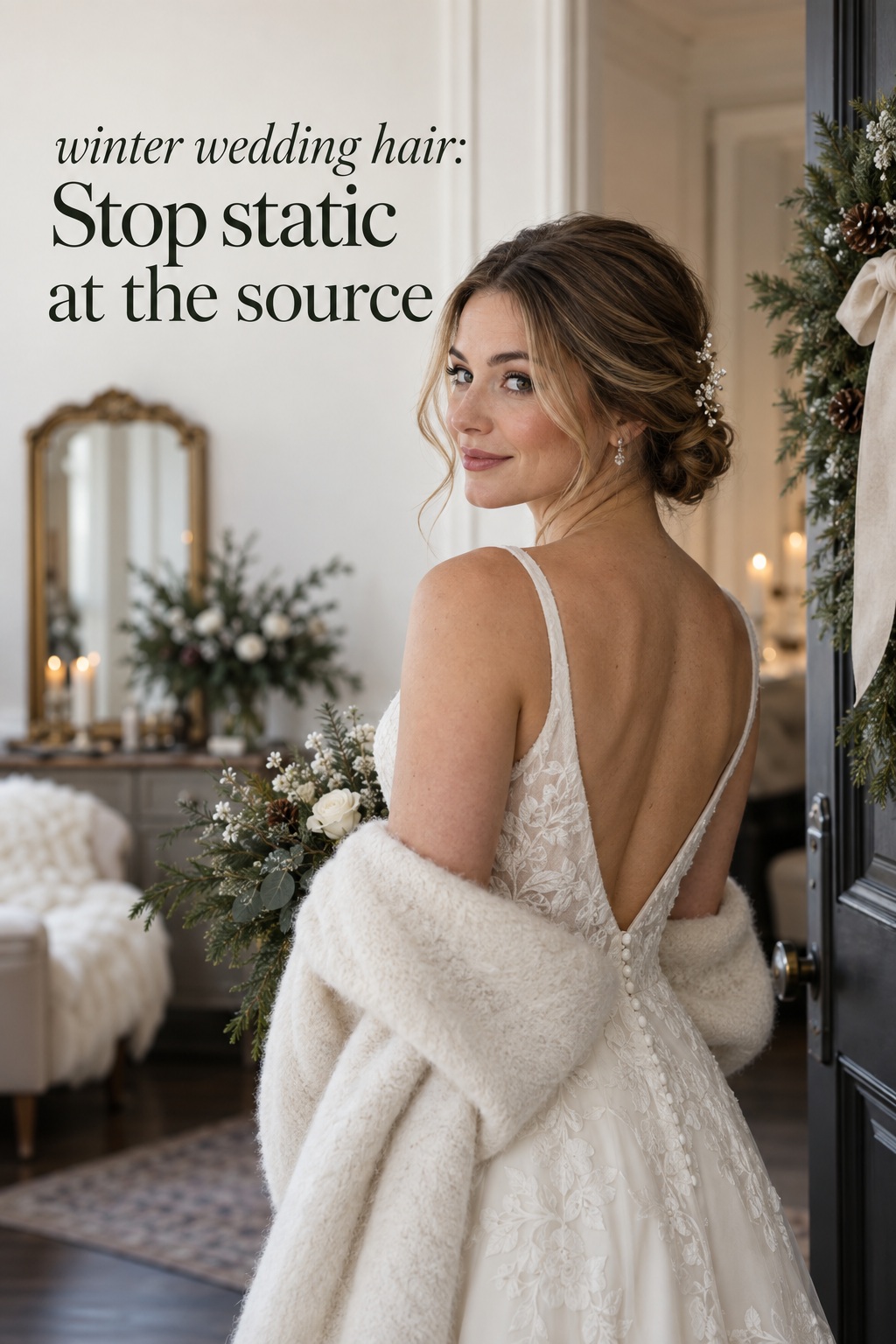
Static is a texture problem, not a reason to hide every strand
Static often shows up as a halo of flyaways, hair that clings to a veil, or shorter pieces that refuse to stay near the face. Dryness and friction can make the effect more noticeable, especially when hair is already fragile from heat styling, color, or rough handling. A recent hair-care explainer from Marie Claire connects winter static with dry or raised cuticles and increased friction, which is a useful reminder that the solution should begin with gentle preparation rather than simply adding more product.
Your wedding look is only the beginning.
Keep your guest list, vendors, timeline, and every important detail together with Zarellea — so your day feels as considered as your style.
If static is your main concern, do not choose a style based only on how smooth it looks in a close-up. Ask where the hair can move without becoming distracting. A low bun can contain the lengths while leaving a soft, controlled face frame. A braided half-up style can give shorter layers a pathway to follow. A sleek ponytail can work when the surface is deliberately polished and the tie is protected from rubbing against a high collar.
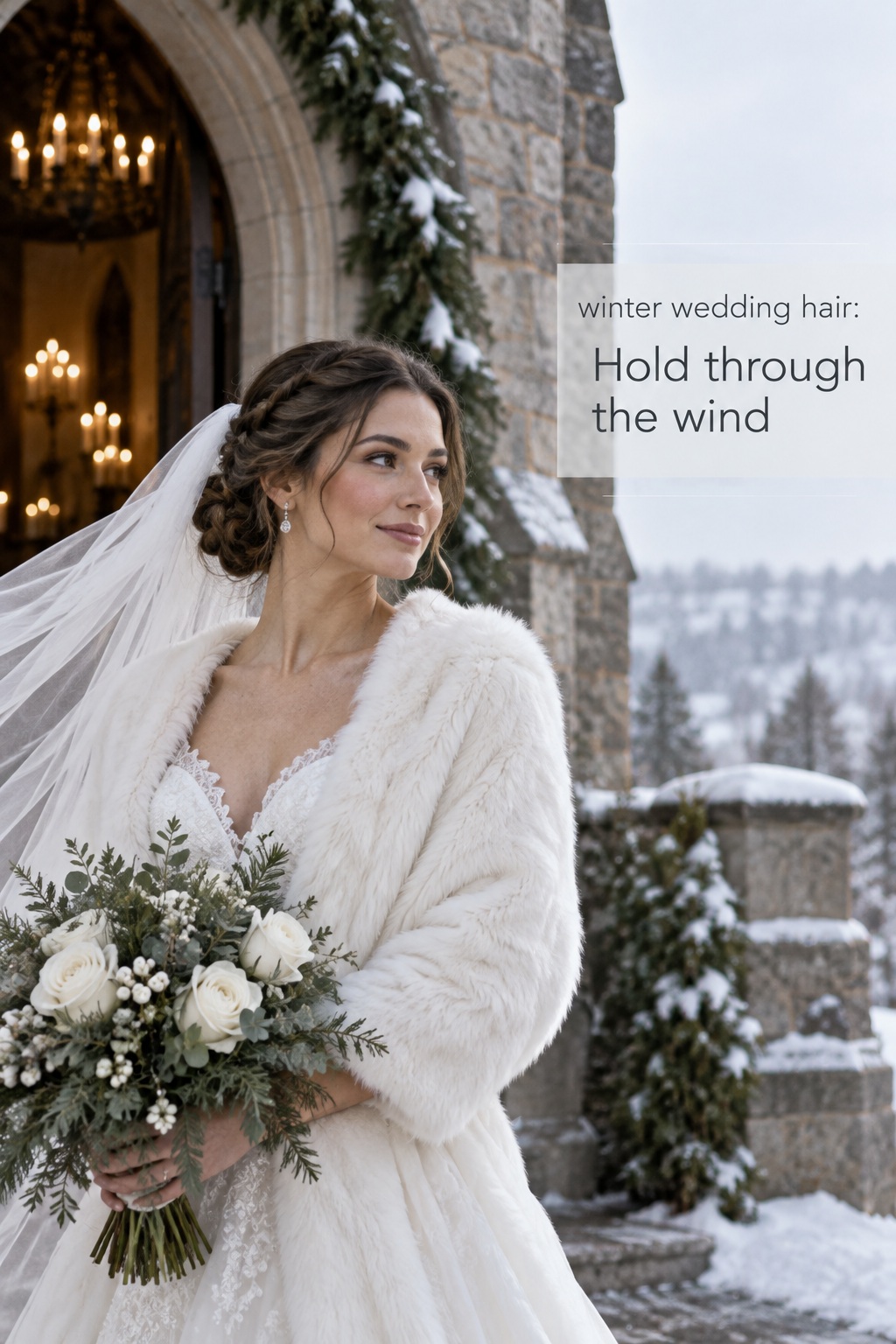
Wind exposes weak attachment points
Wind does not need to destroy a hairstyle to make it feel unsuccessful. It can shift a veil, loosen a tendril, lift the top layer of a braid, or turn a carefully placed bow sideways. The risk is highest when your ceremony, portrait location, or entrance includes an exposed path between buildings. Think about the route, not just the venue. Ten minutes outside can matter more than the fact that the reception itself is indoors.
For a windy timeline, build security into the silhouette. A twisted low bun, compact chignon, or anchored braid gives the style a clear base. If you want hair down, keep the crown and sides controlled, and let the movement happen below the shoulders. Ask your stylist to show you where the hidden pins sit. A beautiful style is easier to trust when you understand which sections are structural and which are intentionally loose.
Indoor heat changes the hold you planned outside
Winter celebrations can move between very different temperatures. Hair may be styled in a cool room, covered by a veil or coat during travel, exposed to cold air for portraits, and then placed in a warm reception room. Fine hair can lose volume, while dense or textured hair can respond to the shift by expanding or softening. The important question is not whether the room is technically dry or humid. It is how long your hair must hold its shape through repeated changes.
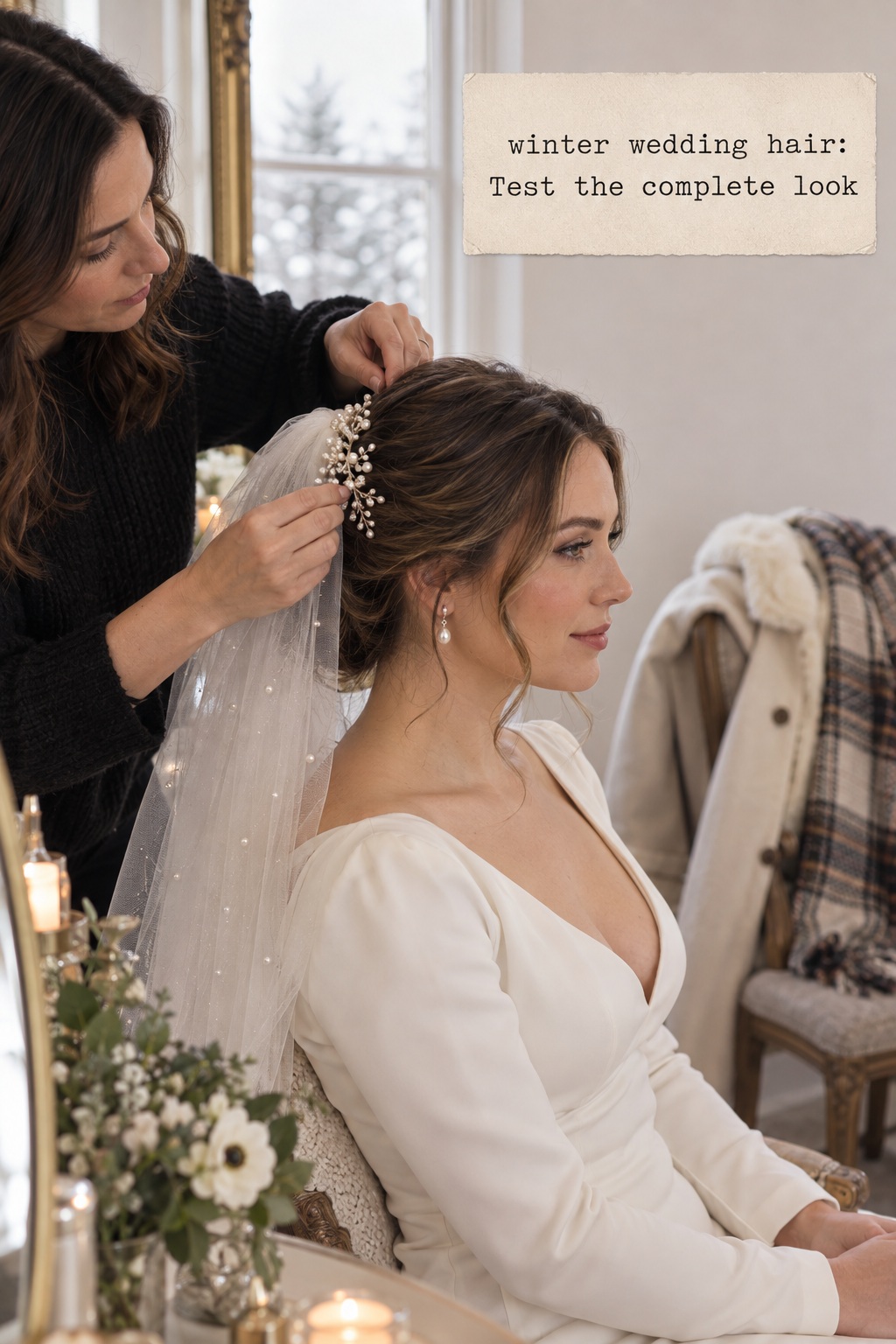
That is why a trial should include a realistic wear test. Sit with the veil in place, put on the wrap or coat you expect to use, walk around, and take photographs from the front, side, and back. If the top goes flat after an hour, you can adjust the foundation. If the ends become too fluffy beneath a wrap, you can change the finish. A trial is a design test, not only a preview of the prettiest first ten minutes.
Solutions by winter wedding hair problem
Once you know the main risk, the choice becomes more manageable. Use the following pairings as starting points, then adapt them to your length, density, texture, and comfort. The goal is not to follow a rule that says every winter bride should wear the same updo. It is to choose a shape whose natural behavior supports the day you are planning.
If wind is the problem, choose a low anchor
A low bun is useful because it places the center of gravity close to the nape. It can be sleek and architectural, softly textured, or built from a braid that is folded into a compact shape. The version you choose should match your dress. A clean bun supports a sharp neckline or minimalist gown. A textured bun with a few deliberate pieces can soften a high neck, long sleeve, or heavier winter fabric.
A braid can solve the same problem while giving the back of the style more visual interest. Consider a wrapped crown braid, a wide low braid, or a side braid that disappears into a bun. The key is to avoid placing every decorative detail on the outside surface. Let the braid create the pattern, then add one accessory at the point where it improves structure or marks the veil placement.
If static is the problem, control the frame and keep movement below
Half-up hair can be a good compromise when you want movement but do not want the entire style exposed to friction. The top section keeps hair away from the eyes and gives the veil or comb a stable area. The lower lengths can be softly waved, curled, or left closer to their natural pattern. Ask for a finish that looks touchable rather than overly dry, and decide in advance which shorter pieces should be released around the face.
Another option is a controlled side part with one visible sweep and a low back section. This keeps the front intentional in photographs while allowing the back to carry the practical work. Avoid repeatedly brushing the surface throughout the day, since friction can make a static issue more visible. A small finishing product and a clean, soft brush are more useful than constant adjustment.
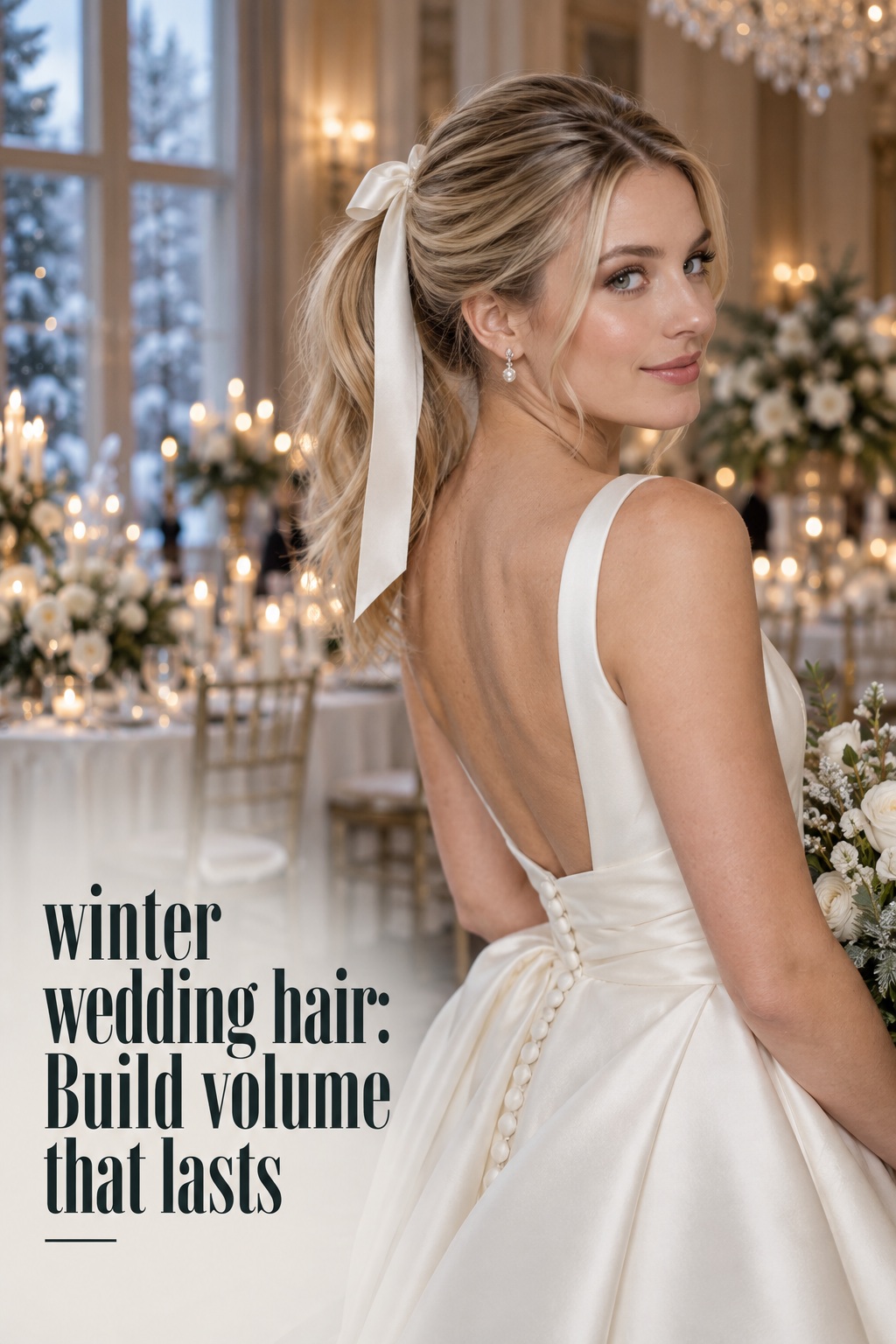
If your hair is fine or slippery, build volume into the foundation
Fine hair often looks full at the beginning of a trial and smaller once the style has been pinned for several hours. A stylist may use texture, padding, extensions, or a different pinning pattern to create a stronger base. None of these choices should be treated as a failure of your natural hair. They are construction tools that can make the shape more visible in photographs and give accessories something secure to grip.
For a low bun, ask to see the profile from behind and from the side. If the bun disappears under a veil or coat collar, it may need more width or a higher placement. For a braid, a slightly expanded structure can look fuller without becoming messy. For hair down, consider a smaller number of polished waves instead of trying to create maximum volume everywhere. A controlled outline usually photographs more consistently than a style that depends on constant fullness.
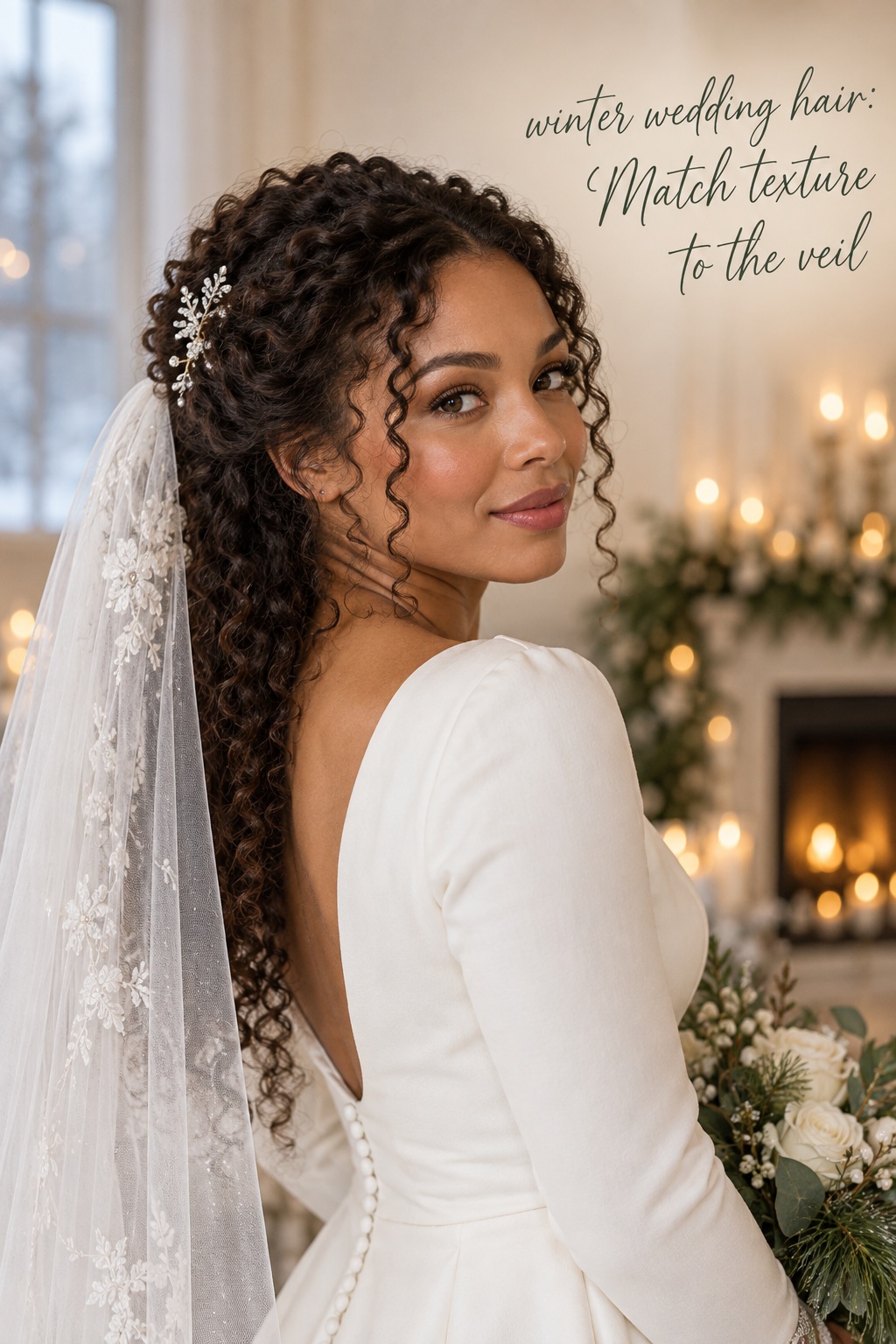
If your hair is curly or coily, protect the pattern instead of fighting it
Winter wedding hair does not need to erase your texture to look formal. A defined curly updo, a sculpted puff, a pinned side shape, or a half-up style can all feel bridal when the finish is deliberate. Share photographs of your hair on ordinary days and on occasions when you have already worn it for several hours. Your stylist needs to understand how the pattern behaves, where it expands, and which areas need the most support.
Cold air, hats, coats, and repeated touching can disturb a curl pattern. If your ceremony includes outdoor portraits, decide whether the most important images happen before or after that exposure. You might keep the hair fully defined for the ceremony and use a small reception adjustment later, or build a style that looks beautiful even when a few curls change shape. The strongest plan respects the texture’s movement instead of promising that it will remain frozen in one exact arrangement.
Match the fix to your veil, dress, and hair texture
The hairstyle decision becomes much easier when it is made as part of the whole bridal look. The dress creates a visual line, the veil adds weight and movement, and your hair texture determines how much construction the style needs. A winter mood can come from fabric, light, or accessories. It does not require an exaggerated hairstyle or a literal seasonal motif.
Use the neckline to decide whether hair should open or clear the shoulders
A high neckline, bateau shape, or detailed shoulder often benefits from hair that is lifted or gathered, because clearing the area lets the dress remain legible. This does not mean you need a severe bun. A soft chignon, textured twist, or pinned curl can preserve romance while giving the neckline space. If the gown is simple and open at the shoulder, hair down or a half-up shape can add movement without competing with the dress.
Structured sleeves and heavier winter fabrics usually look balanced with a hairstyle that has a clear outline. That might be a smooth low bun, a polished ponytail, or a controlled wave with a defined part. Airy lace, chiffon, or a light skirt can carry more softness in the hair. Use the same principle when choosing accessories: repeat the level of refinement, not necessarily the exact material.
Test the veil before you finalize the back of the style
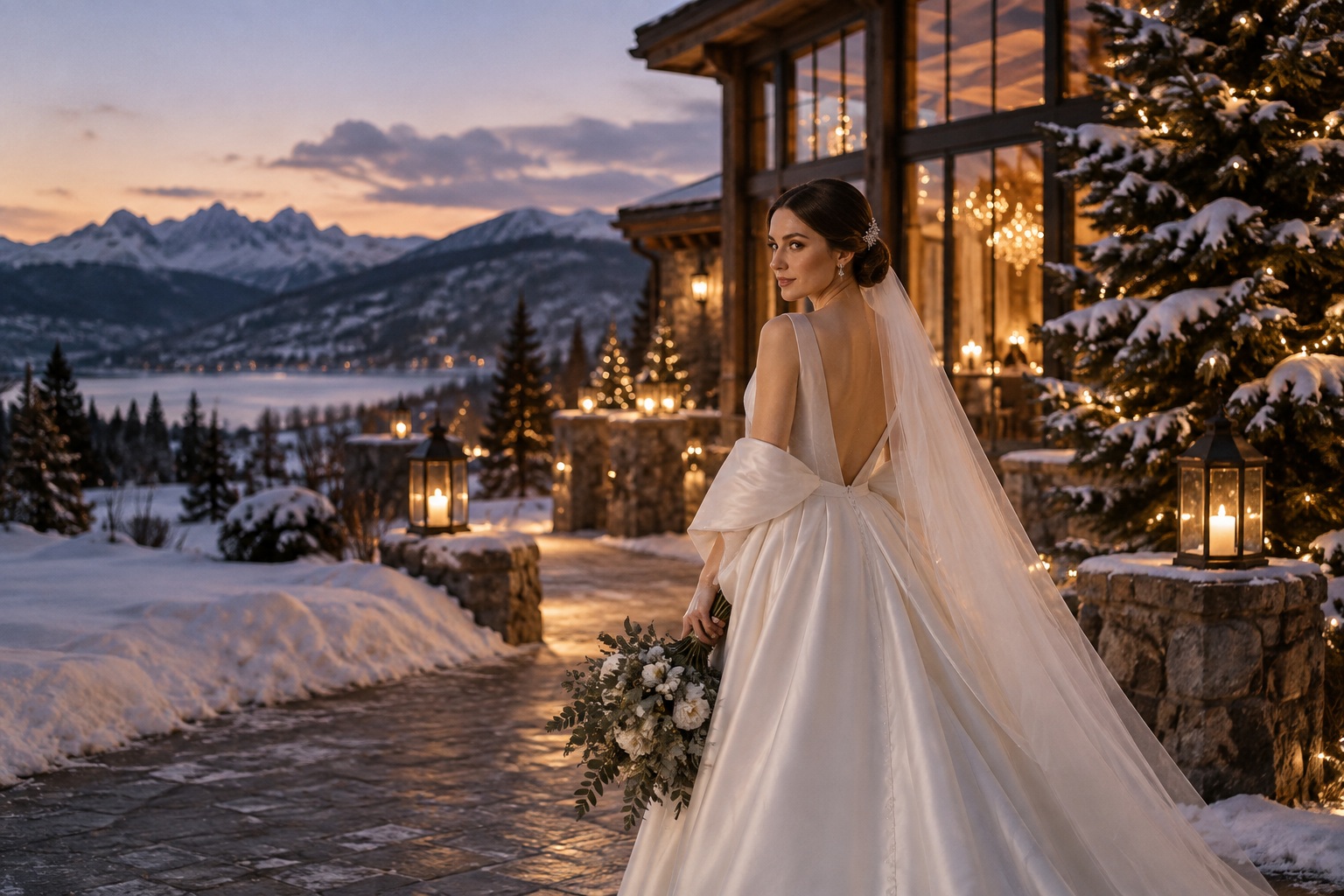
A veil changes the hairstyle in three ways. It adds weight, it creates a point of attachment, and it changes which parts of the hair will be visible in photographs. A cathedral veil may need a stronger anchor than a short blusher. A heavily embellished veil may already provide enough sparkle, while a plain veil may leave room for a comb, pins, or a ribbon at the reception.
Bring the actual veil, or the closest finished sample, to the hair trial. Bridal accessory guidance from Paperlust recommends testing the accessory and veil together so the placement and attachment points can be planned in advance. Take a photograph with the veil on and another after it is removed. If the style looks incomplete without the veil, decide whether a reception accessory will fill the space or whether the hairstyle should carry more of the design from the beginning.
Choose accessories by weight, not only by sparkle
Crystal pins, pearl combs, velvet bows, metallic headbands, and delicate vines can all work for winter wedding hair. The practical question is whether the piece can stay comfortable and secure for the length of the day. A comb needs enough density or a planned support point. A vine may be flexible but still require several pins. A headband can frame the face beautifully, yet it may feel tight if your hair is already pulled firmly.
Use one main accessory idea and let the hairstyle support it. If the veil is detailed, choose a lighter piece or place it where it will not compete. If the gown has a strong neckline or beading, a simple bun with a small cluster of pins may be more effective than a large headpiece. Winter styling already has rich visual language through velvet, satin, wool, candlelight, and greenery. Editing the accessories helps the bride remain the focus.
Adapt the same idea to length and density
Short hair can look distinctly bridal with a polished side part, a defined wave, a sculptural tuck, a jeweled barrette, or a short veil anchored at the right point. Medium hair can support compact buns, half-up twists, textured ponytails, and small braids. Long hair gives you more room for volume and movement, but it also creates more weight. A long style should be tested for comfort and balance, especially if a veil is added.
Density matters as much as length. Thick hair may need to be divided into sections so the pins are not asked to hold everything at once. Fine hair may benefit from a smaller shape with a stronger foundation. If you wear clip-in extensions, protective styles, or a particular curl routine, bring the relevant details to the trial. The goal is to design with the hair you have, not with an imagined version that behaves differently.
The winter wedding hair trial and wedding-day rescue plan
A good winter hair plan is specific enough to guide your stylist and flexible enough to survive real life. Before the trial, collect one or two references for the overall shape, one image showing the back, and a photograph of your dress neckline. Add the veil, hair accessory, coat, wrap, or high collar you expect to use. Too many inspiration images can hide the decision you actually need to make, so focus on the problem your chosen style must solve.
Run a practical trial, not only a pretty trial
- Wear the hairstyle long enough to learn where it becomes uncomfortable or loses volume.
- Test the veil and accessory from the front, side, and back, including the moment when each is removed.
- Put on the coat, cape, wrap, or scarf that may touch the hair during arrivals and outdoor photographs.
- Walk, sit, turn your head, and gently move as you would during greetings and dancing.
- Photograph the style in bright window light and warmer indoor light so you can see its outline in both conditions.
- Ask the stylist to identify the structural pins, the pieces that can be loosened, and the products intended for touch-ups.
Do not use the trial to test a dramatic change you have never considered wearing. Expert bridal hair guidance commonly returns to the idea that the wedding style should still feel familiar to the person wearing it. You can add a more polished part, a veil, a braid, a special pin, or a different finish without losing the features that make you feel like yourself.
Plan the morning around the hair’s actual needs
Ask your stylist whether your hair should arrive clean, washed the night before, or prepared with a particular product. There is no universal rule that works for every texture. What matters is that the agreed preparation gives the stylist the right balance of grip, softness, and control. Keep the getting-ready room at a comfortable temperature and avoid placing a tight coat or hat over finished hair before you leave.
Schedule the veil after the hairstyle is complete and build in a few minutes for photographs before the next activity. If the veil will be removed before the reception, decide who will do it and where the pins will be stored. A tiny emergency kit can include a few matching pins, a small amount of the finishing product your stylist approves, a soft brush or comb, and a compact mirror. The kit should support the plan, not invite everyone to keep redoing the hair.
Give yourself one controlled reception change
A reception change can be as simple as removing the veil and revealing a comb, or as significant as converting a pinned-up style into a softer lower shape. Choose one change that improves comfort or reveals a detail. Multiple changes create more opportunities for pins to disappear, curls to lose their pattern, or the timeline to become stressful.
If you want hair down for dancing, ask whether the stylist can design a secure updo that releases cleanly. If you want to keep the style up, use the reception accessory to make it feel fresh. A satin ribbon, pearl cluster, small bow, or slim headband can shift the look without rebuilding it. The best change is one that has been practiced and can be completed quickly by the person who knows the original structure.
Use the rescue plan only for visible problems
Not every moving strand is a crisis. Wedding photographs often look more natural when the hairstyle has a little life, especially in winter light and textured fabrics. Fix the issues that affect comfort, vision, veil security, or the overall outline. Leave the small changes that make the style look lived-in and personal.
Before the wedding, agree on a simple decision tree: if the veil shifts, secure its attachment point; if static appears around the face, smooth only the planned frame; if the bun loosens, reinforce the base rather than pinning every loose end; if the waves soften, let the shape change instead of forcing it back into a curl that no longer matches the rest. A calm, limited response will protect the look better than constant intervention.
Sources and methodology
This guide was developed from a US search review of current winter bridal hairstyle galleries, accessory guidance, stylist-led advice, and practical hair-care coverage. The sources consistently showed that low buns, braids, half-up styles, waves, and accessories are all viable. The article’s original contribution is the problem-solution framework: identify the winter friction first, then test the hairstyle with the veil, clothing, texture, and timeline that will shape the actual day.
FAQ
What is the most secure winter wedding hair style?
A low bun, compact chignon, or anchored braid is usually a strong starting point when wind and coat friction are major concerns. The most secure choice still depends on your hair texture, density, veil, and the way the style is built. Test it with the accessories and movements you expect on the wedding day.
How do I stop static in winter wedding hair?
Prepare the hair according to your stylist’s instructions, reduce unnecessary friction, and choose a shape that controls the frame around your face. Keep an approved finishing product and a soft tool for limited touch-ups. Do not repeatedly brush or rearrange the hair, since extra friction can make flyaways more visible.
Should I wear my hair up or down for a winter wedding?
Choose up hair when you need stronger wind resistance, want to show a neckline, or plan to wear a heavy veil or collar. Choose hair down when movement is central to your look and your ceremony is mostly protected from weather. A half-up style can provide a useful middle ground by controlling the face while keeping length visible.
Can I wear a veil and a winter hair accessory together?
Yes. Pair them by visual weight and plan their attachment points together. A detailed veil usually works best with a lighter hairpiece, while a plain veil can leave room for a more noticeable comb, pin cluster, or headband. Practice the ceremony look and the reception look separately so removal does not leave the hairstyle feeling unfinished.
When should I have my winter wedding hair trial?
Schedule the trial early enough to make a thoughtful change, and bring the finished veil, accessory, and dress neckline information. The exact timing depends on your planning calendar and stylist availability, but the important point is to avoid a last-minute trial that cannot include a wear test or accessory adjustment.
What should I bring to a bridal hair trial?
Bring a few focused reference images, a photograph of your dress and neckline, the actual veil or accessory, and details about your natural texture and usual styling routine. If a coat, cape, wrap, or high collar will touch your hair, bring that too. These details help the stylist test the complete look rather than only the hairstyle in isolation.